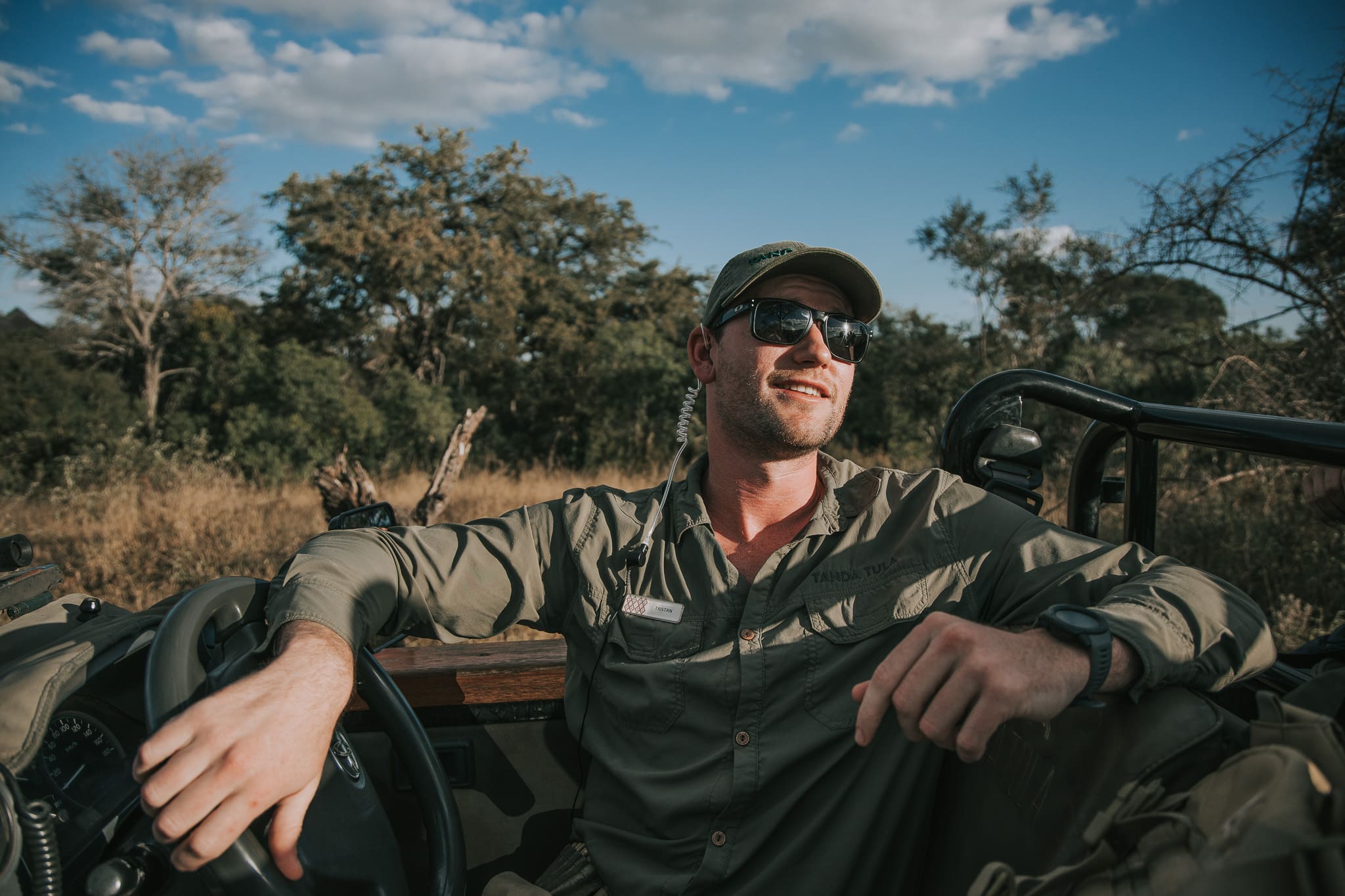
When you meet Tristan, you quickly realise he is someone whose character has been shaped by the wild.
His story begins in KwaZulu-Natal, where he grew up in a family who loved the bush. His childhood was filled with long drives through Hluhluwe, pre-dawn wake ups and early-morning bacon-roll picnics, and long hours exploring the outdoors – the kind of experiences that anchor a lifelong connection to nature. Those early years set the foundation for everything that followed.
Today he calls Tanda Tula home, but the path that brought him here is a mix of hard work, humility, a few well-timed moments of opportunity, and a genuine, enduring love for the bush.
Growing Up With the Bush in His Bones
Tristan was raised in Durban, but his real playground was the bush. As a child, his family would pile into the car long before sunrise and drive three hours north to spend the day in nature. They didn’t always stay over, and often the ritual was simply: drive, explore, return. Repeat.
Later, when his family bought a small lodge in northern KwaZulu-Natal, Tristan spent every school holiday there, fixing fences, repairing roads, learning the land, and discovering what it meant to live close to nature.
This is where the call to guiding began, even if he didn’t yet recognise it.
The importance of family values cannot be overvalued, and Dale recalls, “When I met Tristan’s family – his parents and his sister – it all made sense. They’re salt-of-the-earth people with strong values, the kind we hold close at Tanda Tula. It’s easy to see where he gets his grounding, his warmth, and the way he treats people.”
Learning to Walk Before Learning to Guide
After completing his training with EcoTraining in the Makuleke concession of northern Kruger, Tristan fell deeply in love with walking.
Not strolling – walking.
Seven or eight hours a day, day after day, in some of the wildest terrain in South Africa.
He went on to work for Return Africa in Pafuri (northern Kruger National Park), eventually becoming one of their trail guides and leading primitive trails: no tents, no luxuries, gathering water from riverbeds, sleeping under the stars, and spending days on foot through enormous blocks of raw wilderness with no signal or contact with the outside world (barring an emergency radio).
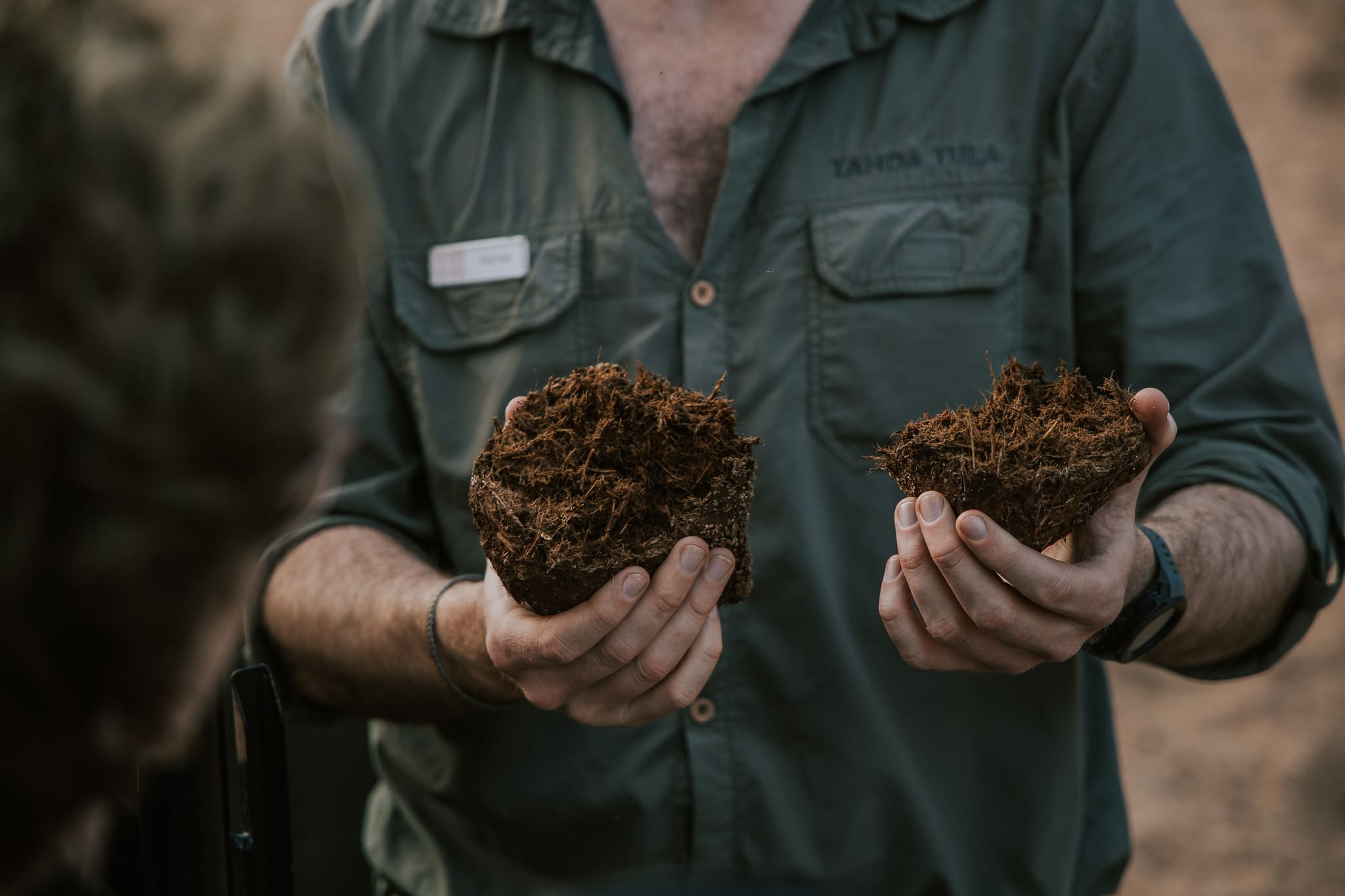
Here, he accumulated walking hours that many guides take a lifetime to build, and he learned to interpret a landscape through its most subtle clues.
He honed the ability to make the bush come alive through detail, context, and curiosity – a skill that would become part of his signature as a guide.
A Chance Encounter That Changed Everything
During his time in Pafuri, after a particularly gruelling seven-day primitive trail, Tristan was given the option to guide Dale, Hayley, and their two boys – a last-minute exchange booking that had come in when the camp was already running at high occupancy.
He was exhausted, but he knew exactly who they were and what Tanda Tula stood for. As a young guide, the name Tanda Tula was one he had heard often – spoken with respect by instructors and guides alike. It was known for its guiding excellence, strong values, and its home in the Timbavati, a reserve many young guides dream of working in.
So despite his fatigue, he took the booking. Instinctively, he understood this was not an opportunity to pass up. That decision changed the course of his life.
“He’d just come off seven brutal days of primitive trail, the camp was packed, the vehicle wasn’t even a proper safari vehicle, and 6-year-old Duke was… well, Duke,” Dale laughs. “Full of questions and talking nonstop, right up front in the passenger seat. And Tristan just kept answering and smiling. His patience with our boy told Hayley and I so much about his character.”
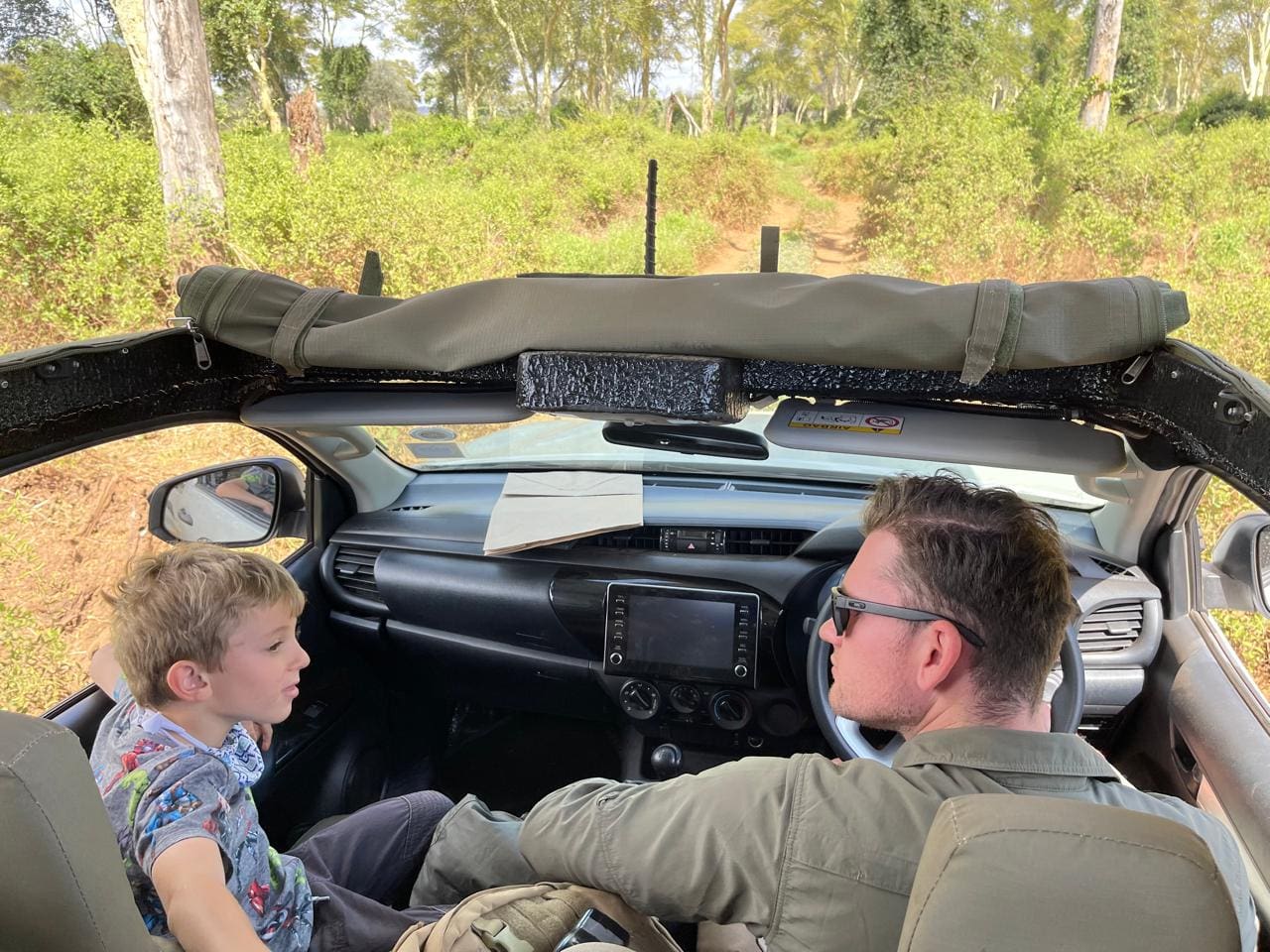
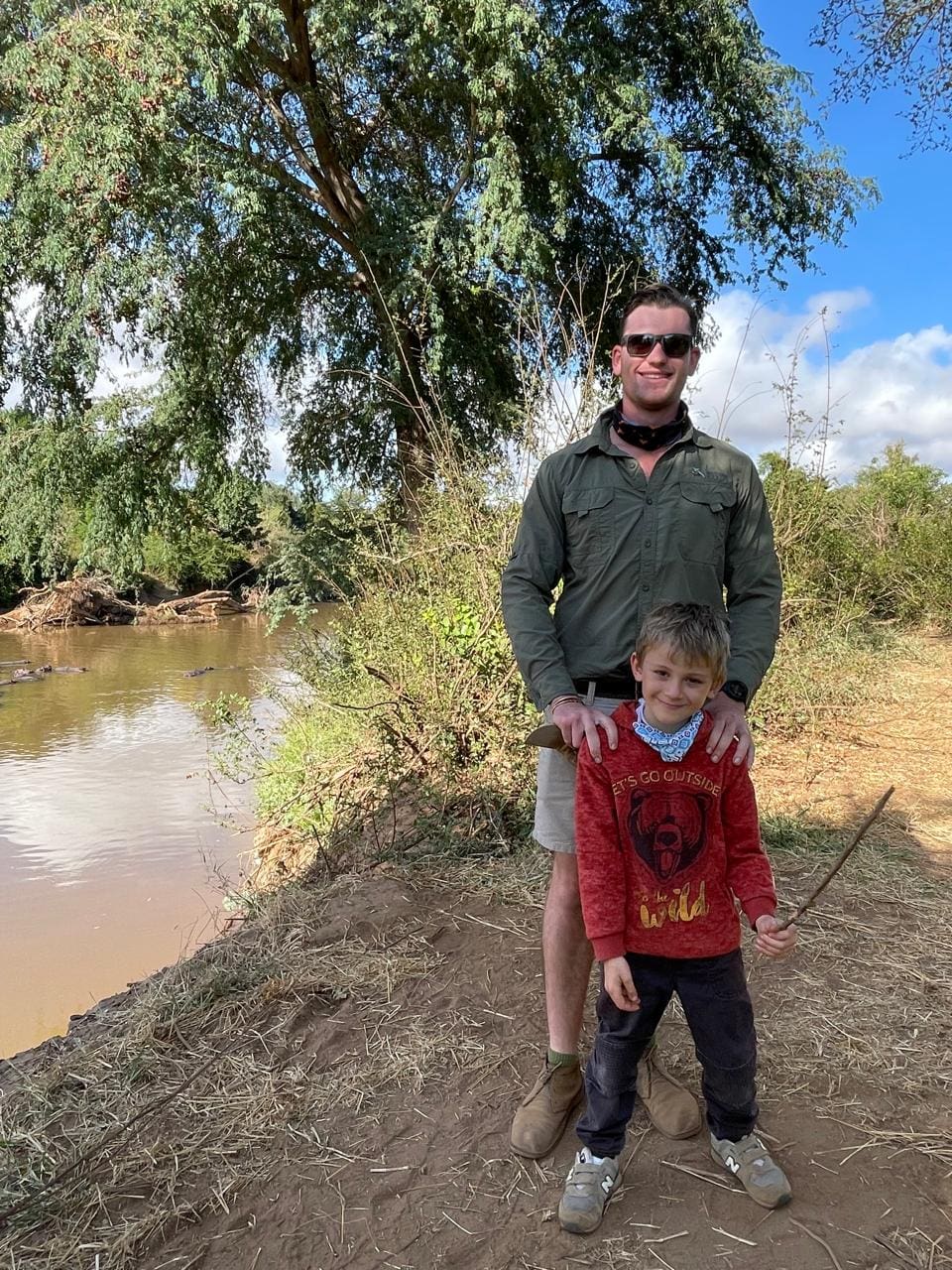
Those few days were filled with natural connection and easy conversation – the kind that doesn’t feel like guiding, but simply spending time with people who see the bush the way you do. The guiding style resonated, the chemistry felt right, and the seed was planted.
Conversations That Changed His Path
Shortly after this trip, Tristan was invited to visit Tanda Tula. He stayed at the then Plains Camp, met the wider team, and immediately sensed a magnetic way of being that felt grounded and real.
When a guiding position opened, Dale reached out – not with a formal interview, but with conversations. Long, considered, intentional conversations. Some over the phone, some in person.
Tristan still remembers travelling to “Signal Rock” – the only place in Pafuri with cell reception – driving his small Suzuki Swift over near-impassable terrain so he could take Dale’s calls. It became a ritual of sorts: drive, climb, run in circles for signal, talk.
Eventually, Dale invited him to stay with his family. They shared a braai, a few glasses of wine, and a gentle, honest conversation about guiding, life, and possibility. The next morning, they all went out on drive together.
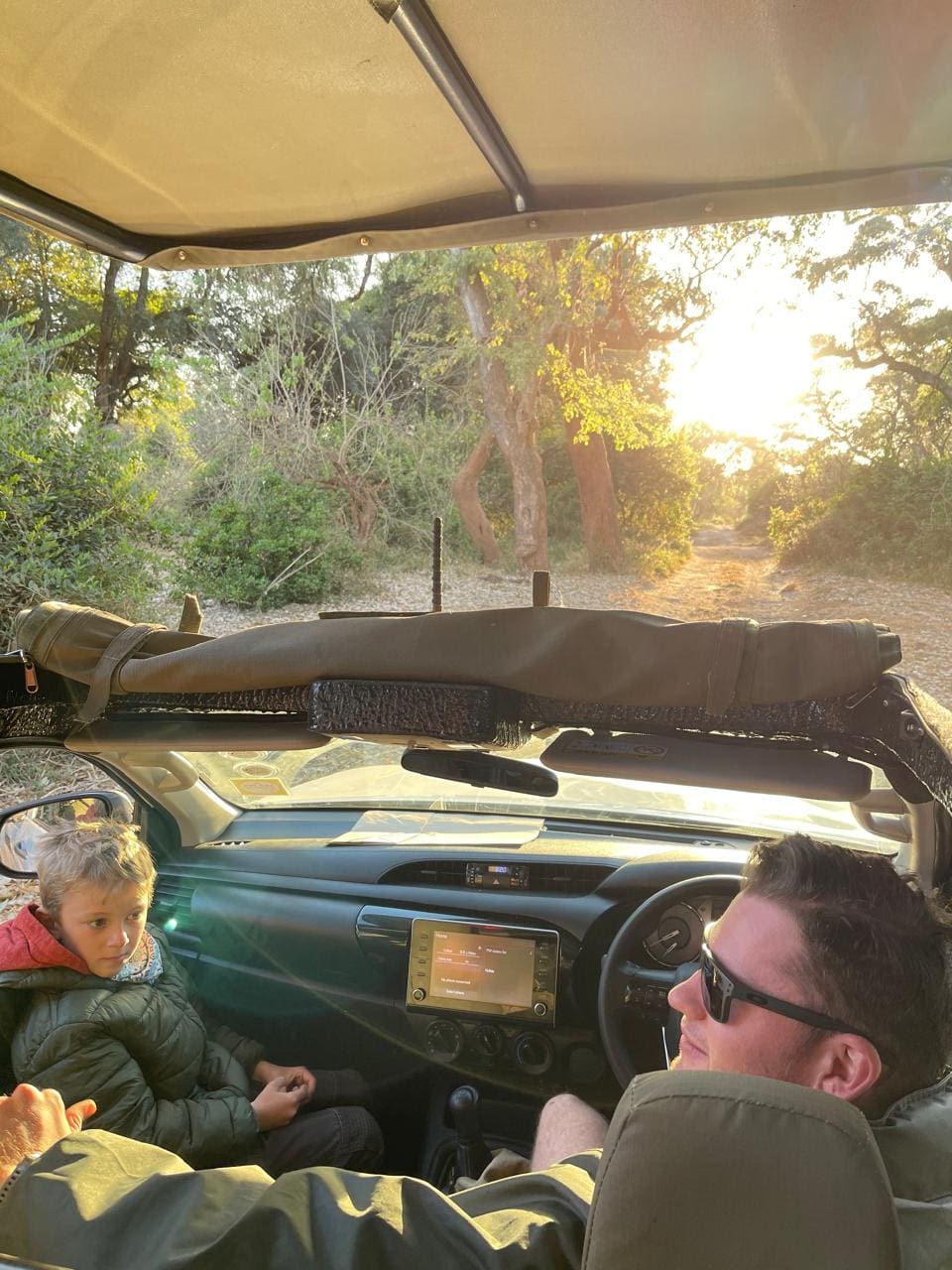
It was during this visit that Duke put Tristan’s guiding knowledge to the test – once again – with one question.
“How many teeth does a hippo have?”
Of all the questions in the world, this was the one Tristan didn’t know. He laughs about it now:
“I remember thinking… seriously? A hippo’s teeth are going to cost me this job!”
But instead of rattling him, the moment revealed something else entirely – an ease, a comfort, a natural flow that felt far less like an interview and far more like the beginning of a mentorship and a genuine bond.
The offer didn’t come immediately. Dale waited a few days, and Tristan is fairly convinced this was deliberate.
And when the offer finally arrived, it was one of the easiest “yeses” Tristan has ever given.
Why the Timbavati Matters
Guiding in the Timbavati was a dream Tristan held long before he arrived here. As a young guide in training, he knew the reserve by reputation as a place of extraordinary ecological diversity, authentic wilderness, and remarkable tracking opportunities.
The Timbavati has gravitas.
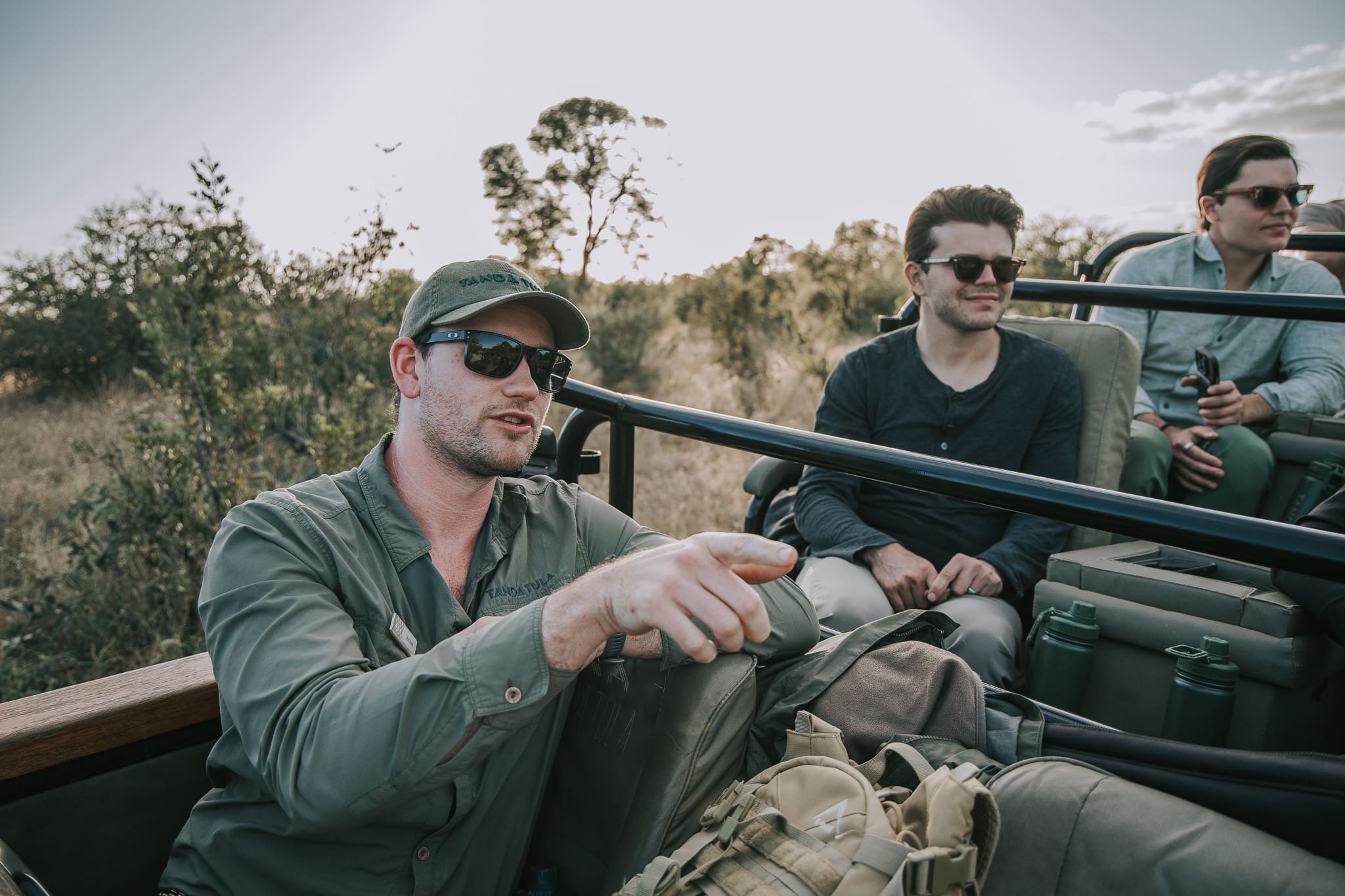
For Tristan, arriving here felt like stepping into the landscapes he had admired since childhood: the stories of white lions, the open woodlands, the dry riverbeds, the wildness held within vast hectares of unbroken bush.
And unlike many reserves, the Timbavati invites guides to show everything – from lions and leopards to geology, botany, birdlife, tracks, history, and silence.
It is a place where a guide can bring the full breadth of themselves.
Life at Tanda Tula: A Family, Not a Team
Tristan has now been at Tanda Tula for three and a half years and, in his words, is still “the new guy”. Here, tenure stretches decades:
- Scotch, a senior guide and master tracker, has been with Tanda Tula for more than 30 years.
- Ginger and Steve have been guiding for well over two decades.
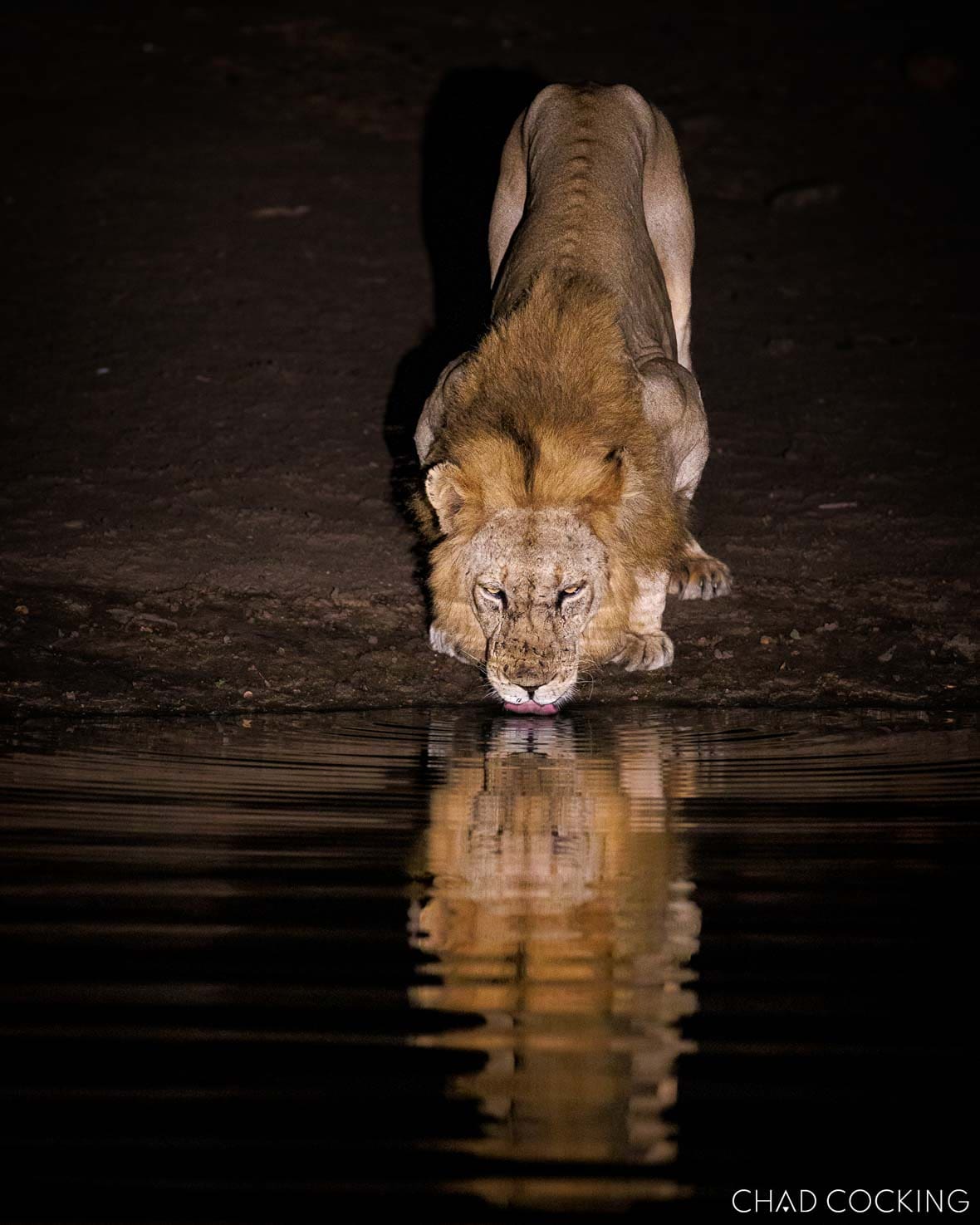
- Chad brings nineteen years of guiding experience and an exceptional photographic eye.
What struck Tristan early on – and still does – is how genuinely this team values each person’s individuality.
There is no hierarchy of personalities, culture of competition, or expectation to conform to a prescribed style. Here, every guide is encouraged to be themselves.
Don and Nina are part of this lineage too. Long before leading Tanda Tula, they lived and worked in the Timbavati, and their understanding of guiding life is based on experience.
And then there is Dale – someone Tristan holds in deep respect. With a strong trails background and years of guiding in these very landscapes, Dale carries the kind of instinctive, lived qualification that only comes from real time in the bush. His knowledge is quiet and assured, and his mentorship intentional.
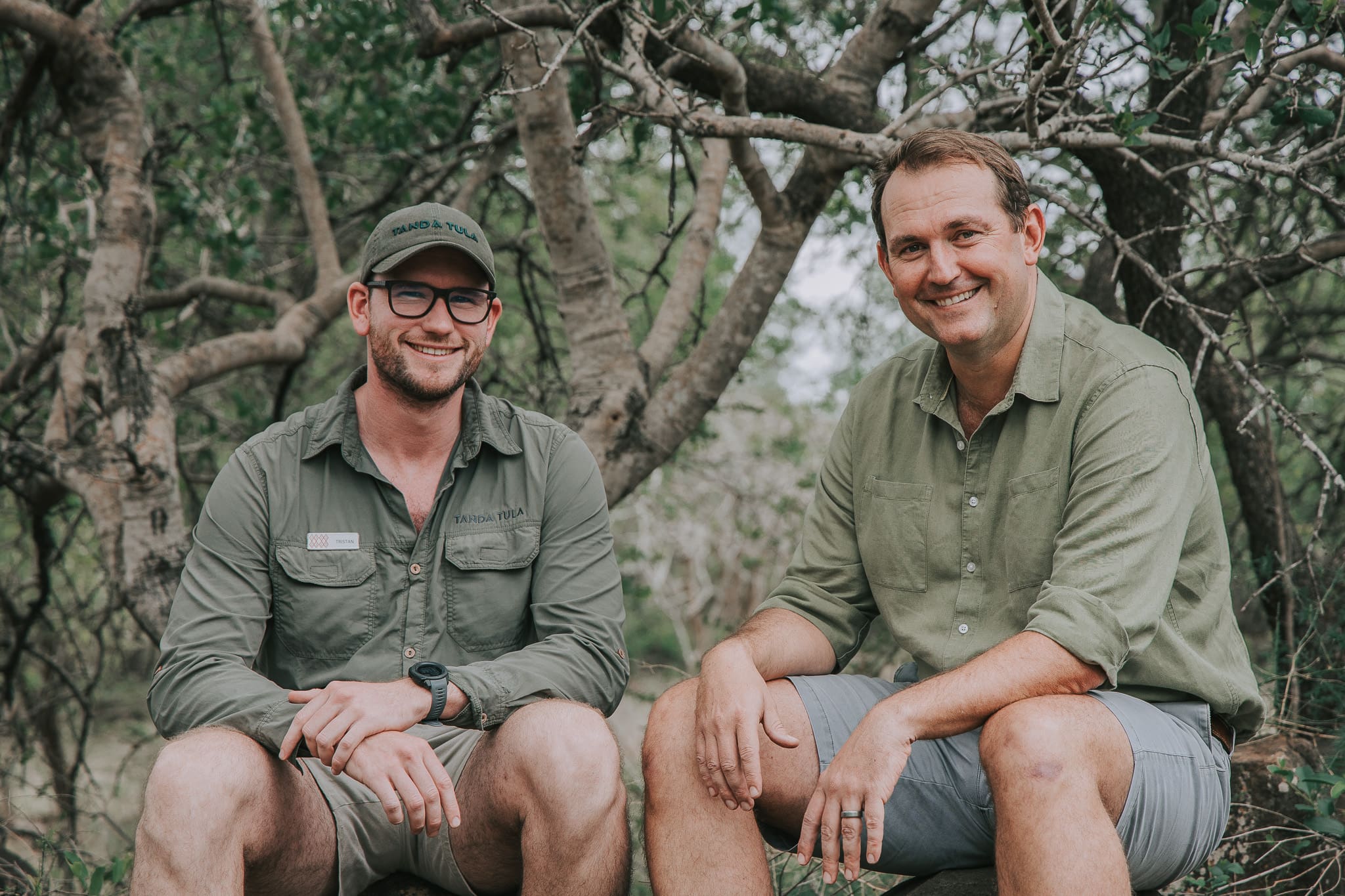
It’s easier to learn, lead, and contribute when you’re surrounded by people who have long lived the ethos you’re stepping into.
The Bond Between Guide and Tracker
Tristan guides with Kurisani, new to the family and one of the younger members of the team. They have quickly become close companions. Kurisani joined Tanda Tula after working with the Timbavati’s anti-poaching unit and completing his training with the Tracker Academy.
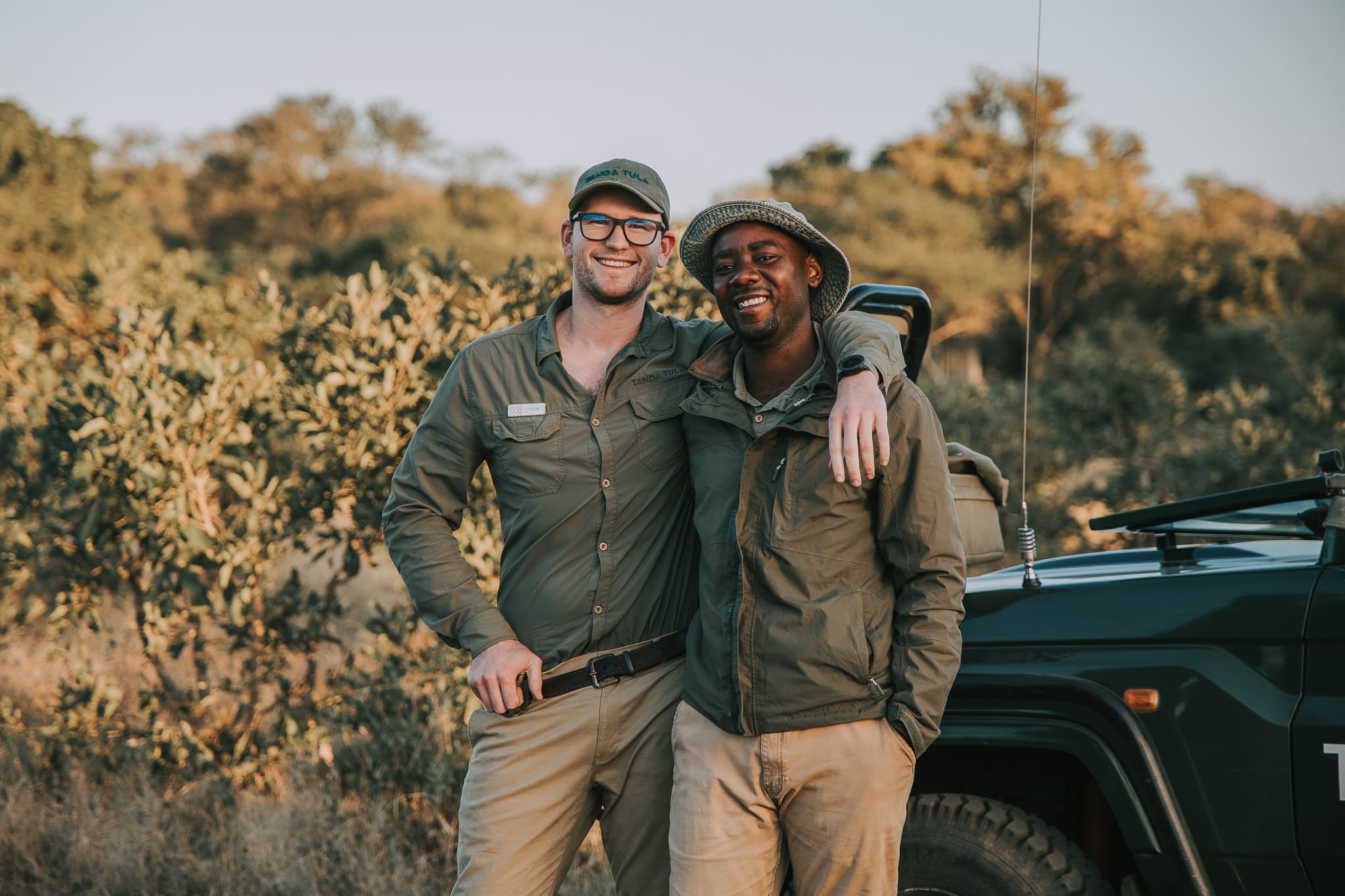
Their partnership is natural and easy, grounded in youth, humour and curiosity, and guests feel this chemistry immediately.
Woven into this journey are the teachings of Jack and Scotch, both master trackers.
And beside them is Chad, whose legendary photographic instinct expands how Tristan sees and interprets the bush.
To us, learning is simply part of daily life, shared freely between everyone in the team. If one of us grows, we all grow.
What Tristan Brings to the Tanda Tula Experience
Tristan struggles to define “his thing,” and perhaps that is exactly the magic. He doesn’t see guiding as performance or speciality – he just loves it all.
He is a natural storyteller, drawing on childhood memories, years on foot in Pafuri, and a deep, intuitive understanding of nature. He reads people well, listens closely, and adapts instantly. He creates experiences that feel personal and meaningful because, for him, they truly are.
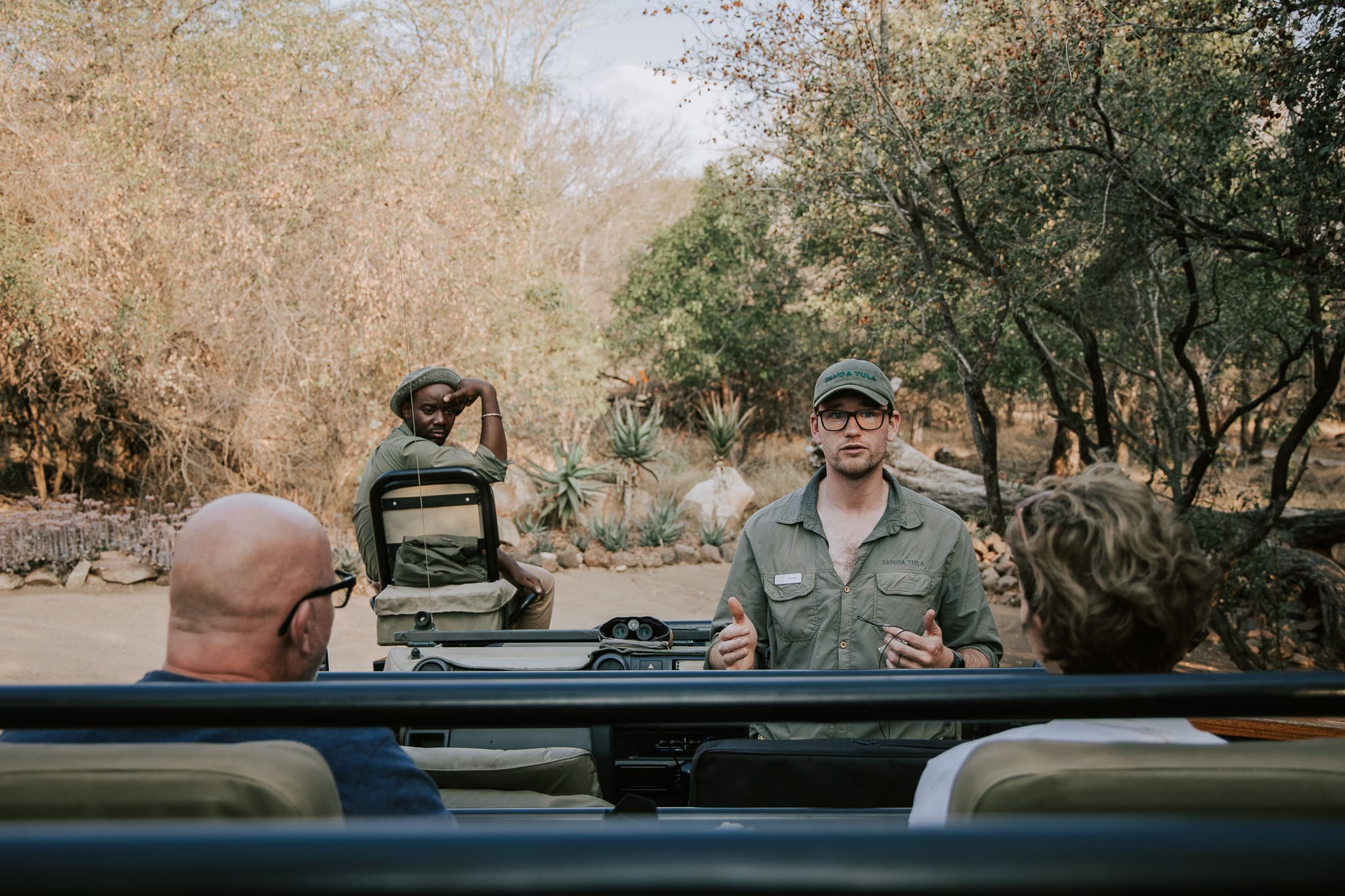
And when he sees the bush through the eyes of a guest – whether it’s someone’s first leopard or a returning guest experiencing something entirely new – he feels the magic all over again.
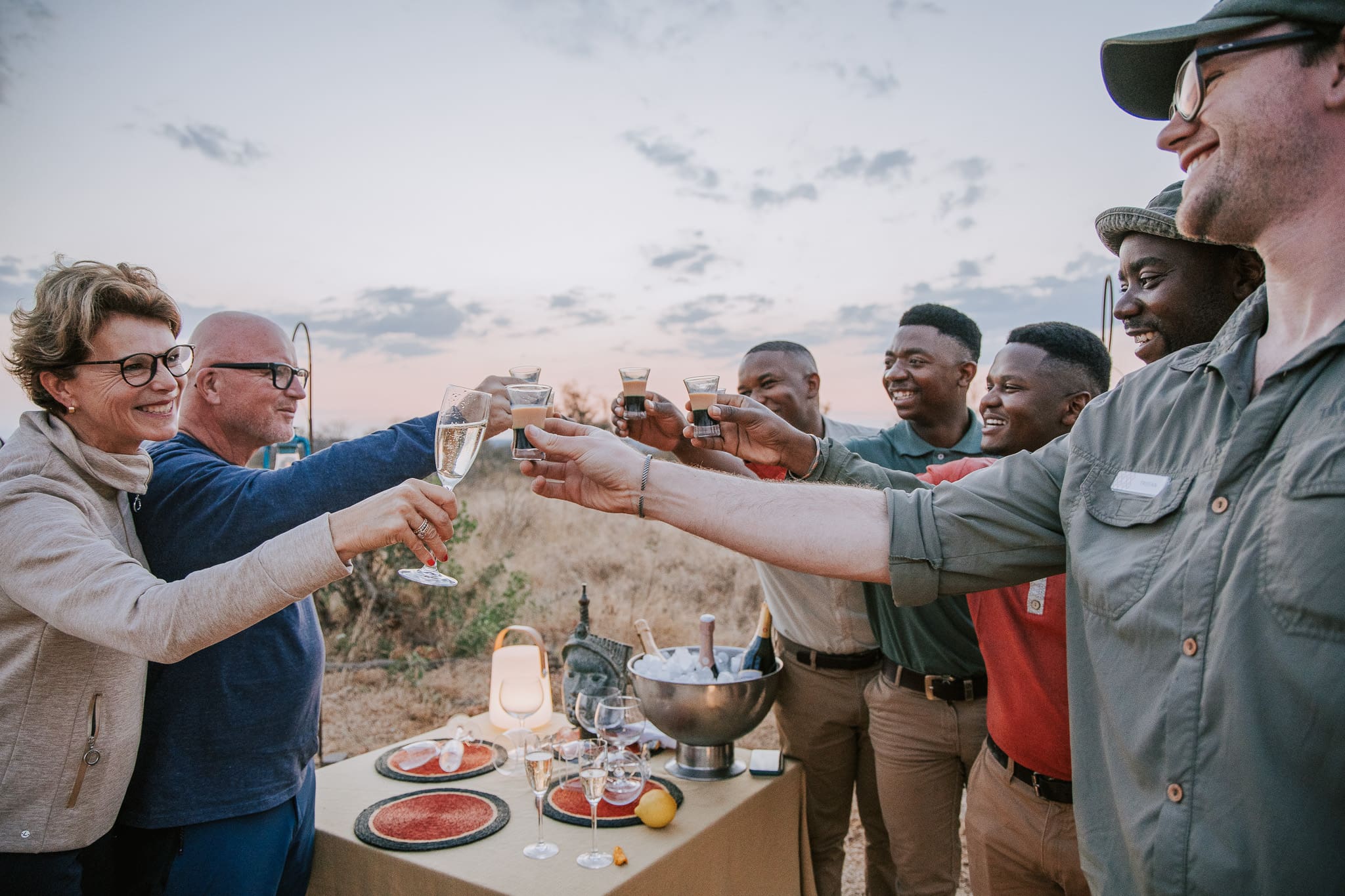
On Tristan, Dale has this to say: “Tristan has a very special energy. Magnetic, charming, with a genuine desire to make people happy. He’s always quick to offer support or lend a helping hand and gives so much of himself. He really listens and pays close attention. He’s patient even in the most challenging situations. When he’s on leave, his presence is missed.”
Exactly Where He Wants to Be
In the middle of our conversation, Tristan said something quite profound:
“I’m exactly where I want to be. There’s nowhere else I’d want to go.”
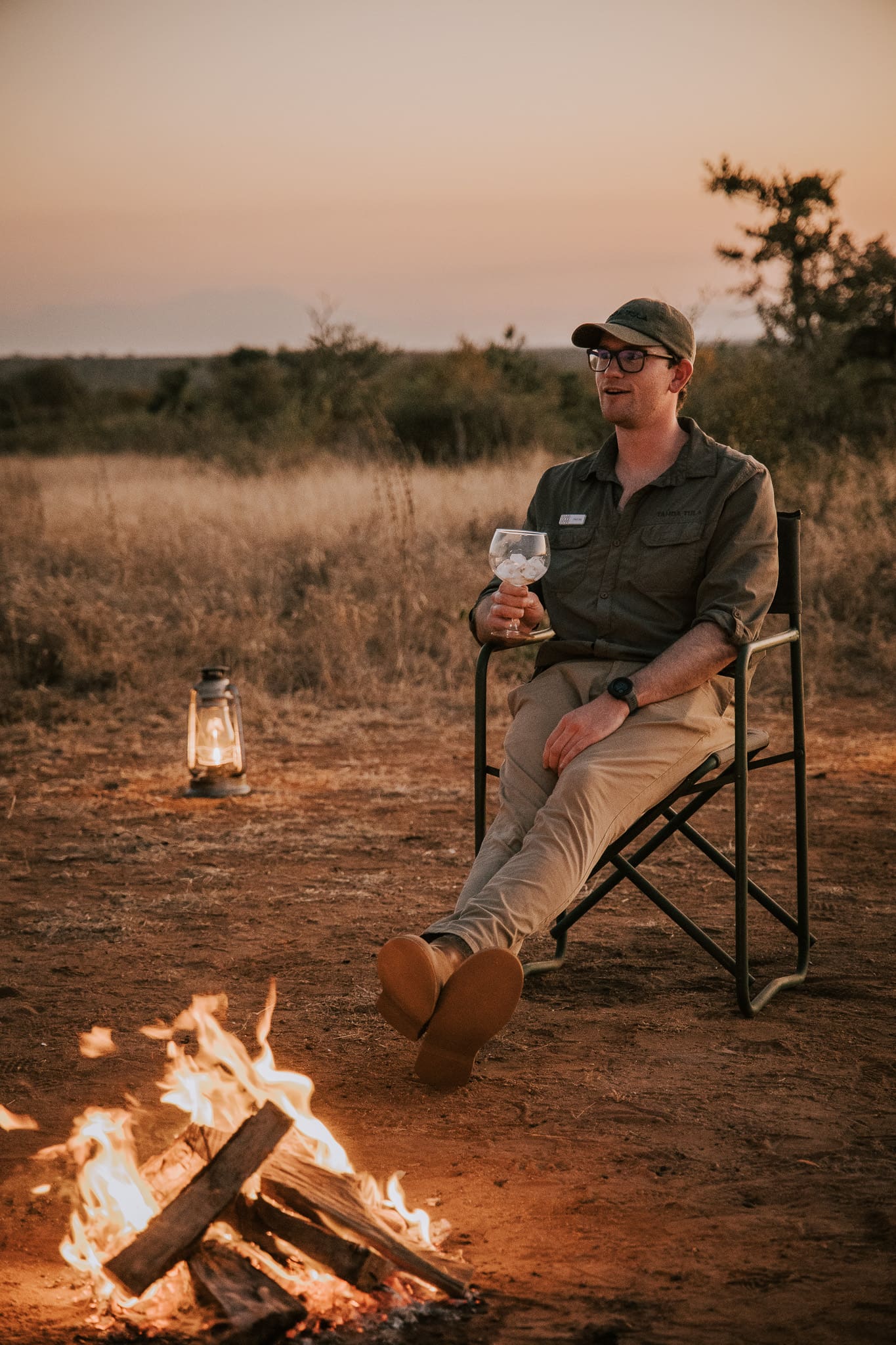
For a guide, that is everything.
For Tanda Tula, it is the heart of who we are.
A place people grow into, stay for, belong to, and carry with them for life.
A family of families.
A home in the Timbavati.
And Tristan, with his humility, warmth, and wide-open love for the bush, is now part of that legacy and part of our story.