I’m often asked where the inspiration for our “new” Safari Camp really began, and the truth is that it wasn’t sparked by a Pinterest board or a sudden surge of creative genius.
The idea to refresh the camp had been with us for years. By the time 2020 rolled in, she was an old girl, and we had loved her through every tired corner and every slightly wonky angle.
We had spoken so often about giving her the overhaul she deserved. But Safari Camp was always full, alive, and – somehow – enough. So we did what we could, small cosmetic tweaks here and there, just enough to keep her feeling dependable and loved. Looking back, the timing never being quite right turned out to be its own blessing.
Why? Because when COVID arrived and turned our world on its head, it brought with it an opportunity, coupled with the space to manifest it, that we might never have had in the blur of ‘normal’ life BC (before COVID).
In that quiet, uncertain time, with all the usual noise stripped away, what had always been an intention became a possibility. The seeds of this camp were planted long before the world changed, and when we finally had the opening, the right person appeared to bring it to life.
A Silent Partner Who Became Family
Our relationship with Ricky Hartog began in the simplest way, as tenant and landlord, and it remained that way for almost ten years. Ricky was solid from the beginning – reliable, generous in spirit, and a wonderful human being.
In the midst of the upheaval of COVID, when the world felt uncertain and the ground seemed to shift under our feet, he came with an idea that changed everything.
I will never forget his words.
“I would really love to be part of Tanda Tula. I want to help you to build camps that are worthy of the Tanda Tula name.”
It felt as if someone had walked into the fog and turned the lights back on.
His partnership never felt like a transaction; it felt like someone coming home. Someone who understood us, knew how we work, and what we care about.
And so Ricky became the sixth member of our shareholders’ team, a once-silent presence who had finally taken his place at the table. Although, if we are honest, it simply formalised what had long been true. He has always been part of our family.
A New Beginning Beneath Our Feet
Once Ricky joined us, the practical question returned. Were we upgrading the existing camp, or were we building something new? We had spoken about a refresh for years, but when we began opening up the old structures, the answer became clear almost immediately.
Under the charm were ageing water systems, old sewage lines and heavy concrete bases that had been added layer upon layer over the decades. As we pulled everything up, we found debris, pipes, and all sorts of forgotten remnants from earlier builds. It became obvious that the camp had reached the point where patching and polishing were no longer viable.
Removing those old foundations felt like letting the earth breathe again.
It also gave us the chance to imagine a camp that would tread far more lightly. Something built with a minimal footprint, something that could one day be removed without leaving a scar on, and in, the landscape.
Rebuilding from scratch was no longer a bold idea; it was simply the right one.
The Day the Thatch Came Down
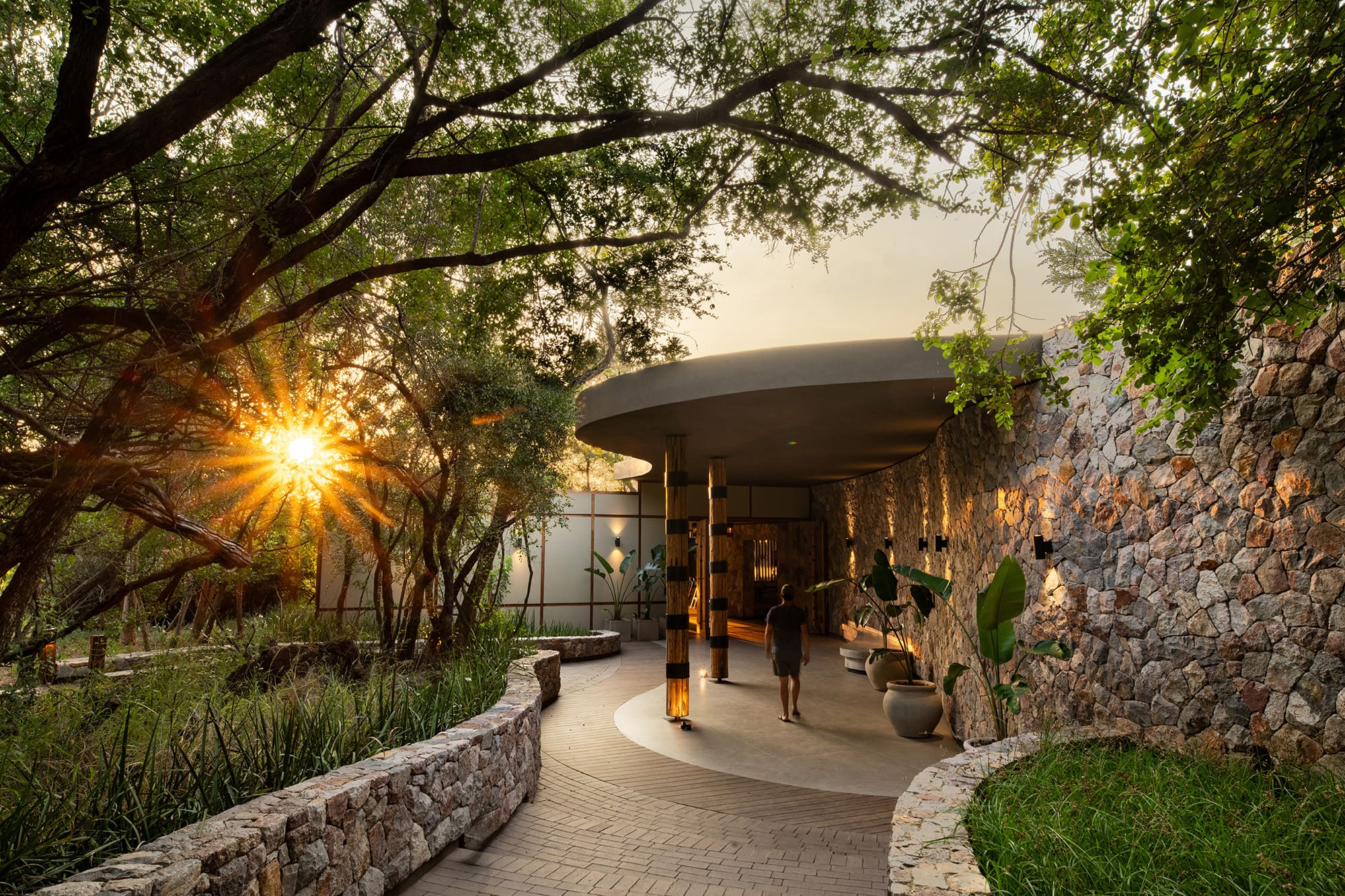
We will never forget the moment the old thatched roofs were removed. For the first time, we could see the line of the river, the curve of the tall riverine trees, and the vivid colours of the bush uninterrupted. It was as if the camp had been revealed to us in a way we had never seen before. The light poured in, and we suddenly knew: the new camp would need to honour this – the architecture would need to step back so the bush could step forward.
The next question naturally followed: who was the right person to help us bring this vision to life?
Choosing the Right Architect
We needed someone who could help us build a camp that fitted naturally into this landscape. Someone who knew the bush, understood design, and believed that anything we added should follow nature rather than compete with it.
That search led us to Nicholas Plewman. His work across Africa had already caught our attention, but what stood out most was his approach. Nick is not the kind of architect who makes the building about himself. He listens before he speaks, he notices the small things, and he brings a humility that allows the environment and the client to guide the conversation. He understands Africa, and he understands how to create beauty without ever overshadowing the land it sits on.
From the first walk-through together, it was clear that he saw Safari Camp the way we did.
Design Philosophy
For me, design never begins with fabrics or finishes or what looks good in a photograph. It begins with a feeling. I always start by asking how people will experience a space and how I want them to feel when they walk into it. I think about the way a guest settles into a chair after a long day on safari, where their eyes naturally drift, what invites them to join a conversation and what allows them to slip quietly into their own thoughts.
From the beginning, our intention was to create a camp that held a gentle balance. I wanted it to have structure without becoming rigid, boldness without being loud, and a sense of grace that comes from knowing when to stop. We were aiming for something handsome and rooted in place, but also comfortable and deeply human. The camp needed to feel generous, honest, and lived-in.
Intelligent design is about comfort, adaptability and elegant simplicity – therein lies the beauty.
Colour Cues from Nature
The colour palette came from the seasons in the Timbavati. In the early rains, the deep aubergines of the purple pod cluster leaves reveal themselves, shifting through shades of wine-red and plum. The silver cluster leaf brings in the softest greens, almost velvety in the way it catches the light. And then there is the mopani rhigozum, with its gentle buttery yellows that glow against the bush after the first storms of summer.
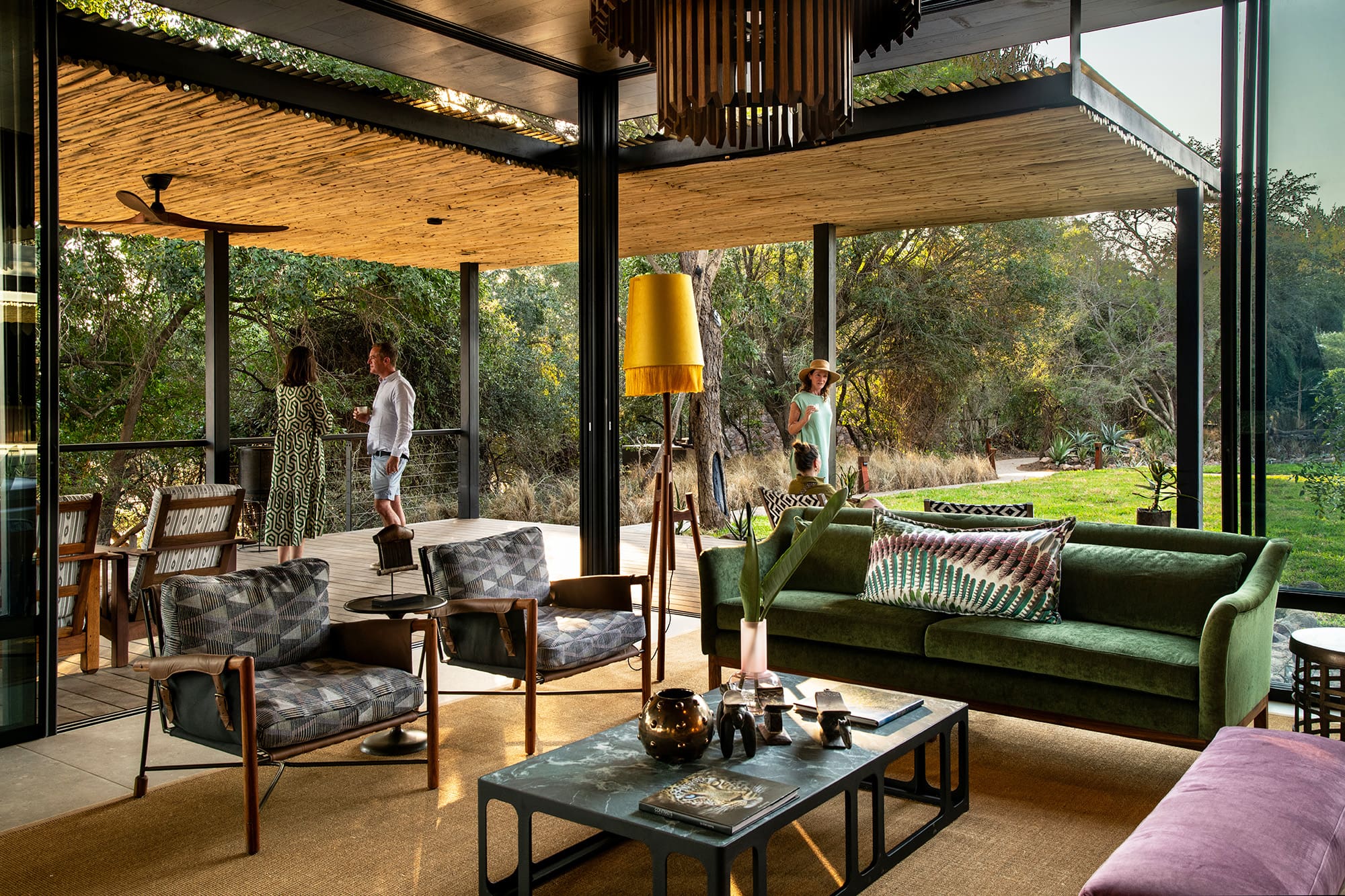
These colours, in all their variations, became the chart that guided the fabrics, the accent hues, and even the subtler background details of the camp.
Patterns, Textures and Art
I have always believed that a lodge should carry the fingerprints of the people who inspired and built it. I wanted to honour local craft and bring in the geometry of Shangaan-inspired patterns – the kind of designs that feel both ancient and strikingly contemporary at the same time. Bold triangles, repeated rhythms, and strong lines that have meaning.
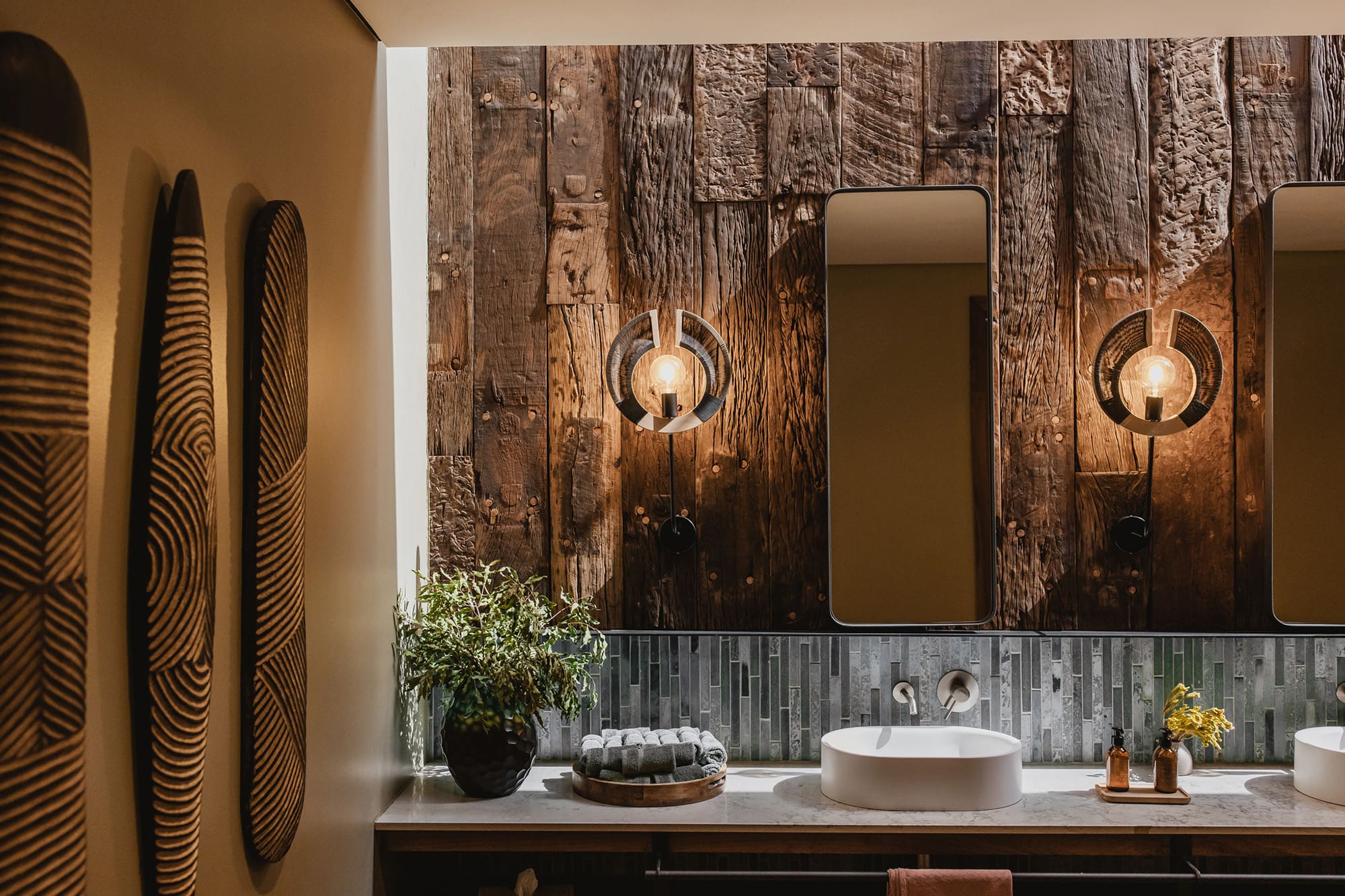
We worked with talented South African artisans and artists. Fabrics were chosen for their texture and authenticity, while furniture represented craftsmanship and heritage. Talented designers created the beautiful bar chairs and cabinetry with a level of care that is rare and precious.
The lamps from Stephen Pickus were made entirely from recycled glass, transforming discarded fragments into something luminous. The mural on the curved dining room wall is a story of its own, brought to life by the gifted Gina Waldman and installed with Don’s meticulous precision.
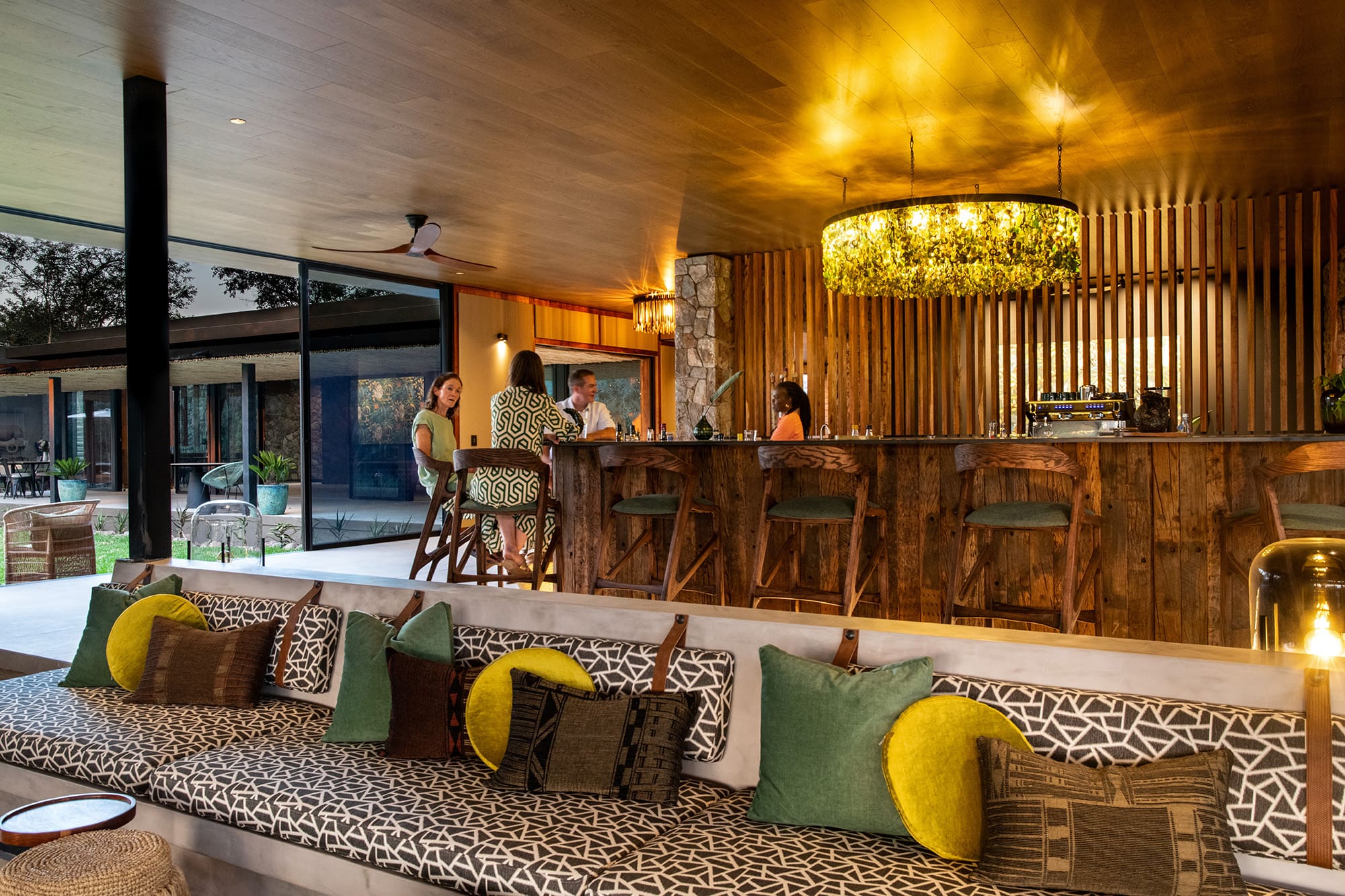
Every element had an intention behind it, and every object has a person behind it. Everything in this camp comes with a story.
Furniture & Spaces Made for Living
One thing you learn after decades of hosting guests is that furniture must serve the people who use it. A chair can be beautiful, but if it does not invite someone to sit comfortably or connect with others, it has missed the point entirely. I wanted the camp to be flexible, to shift with the natural flow of the day, and to encourage people to come together without forcing anything.
We designed pieces that could move easily. Ottomans with wooden or stone tops, suitable for seating or side tables. Modular sofas that can be pulled apart or pushed together. Stools that guests naturally reach for. And then, of course, my favourite thing: bench seats. They are both practical and inviting (horizontally and vertically …☺), they work in every space and every season. Add a sumptuous cushion, and you have the most generous seat in the house.
Because the furniture can shift so easily, the camp naturally breathes with the seasons. In winter, everything draws inward toward the fireplace, which has always been the heart of the lounge. In summer, the whole space opens outwards again, exhaling.
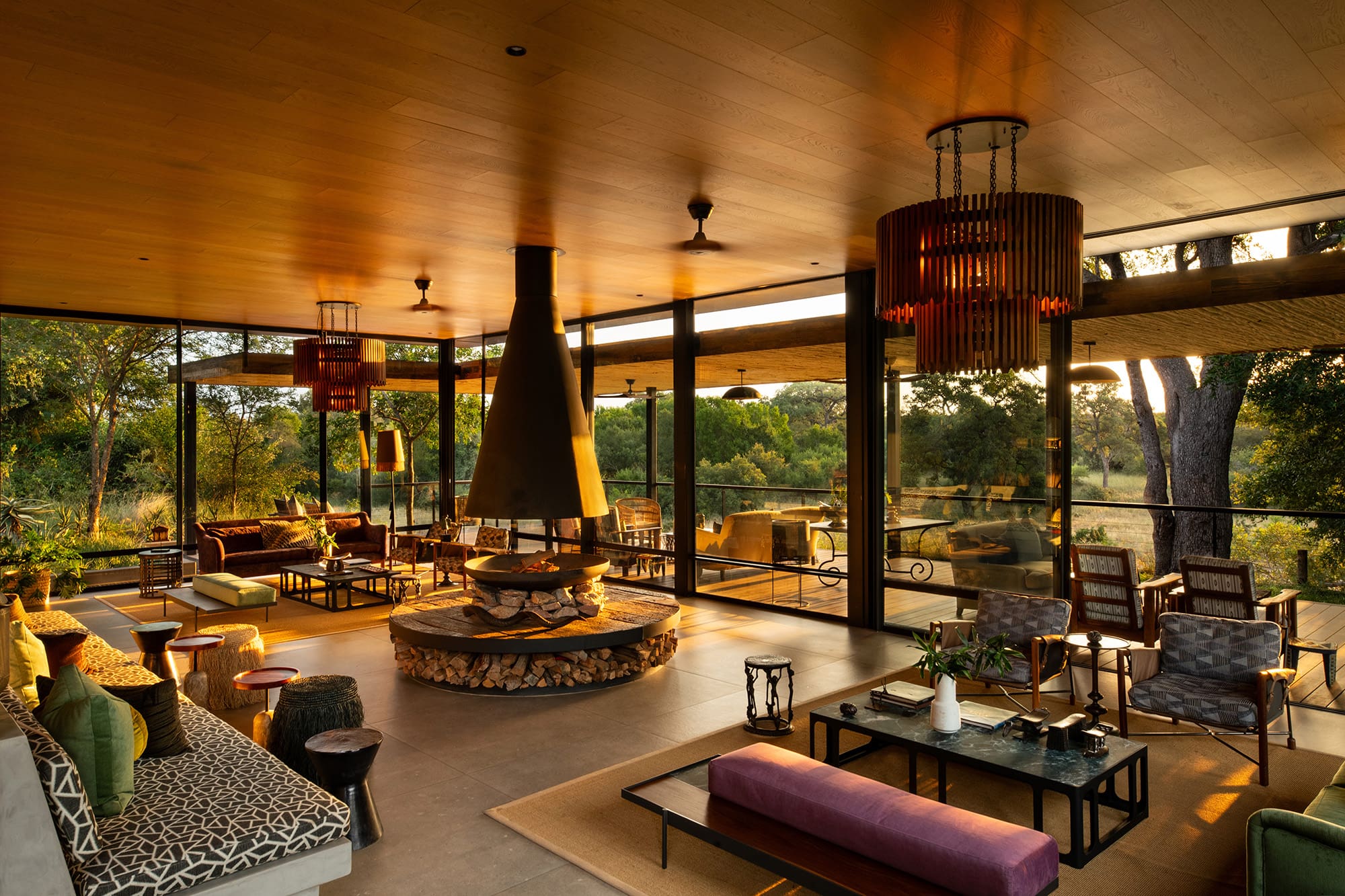
The adaptability is part of what makes the spaces feel alive.
The Suites: Tranquil, Honest and Uncomplicated
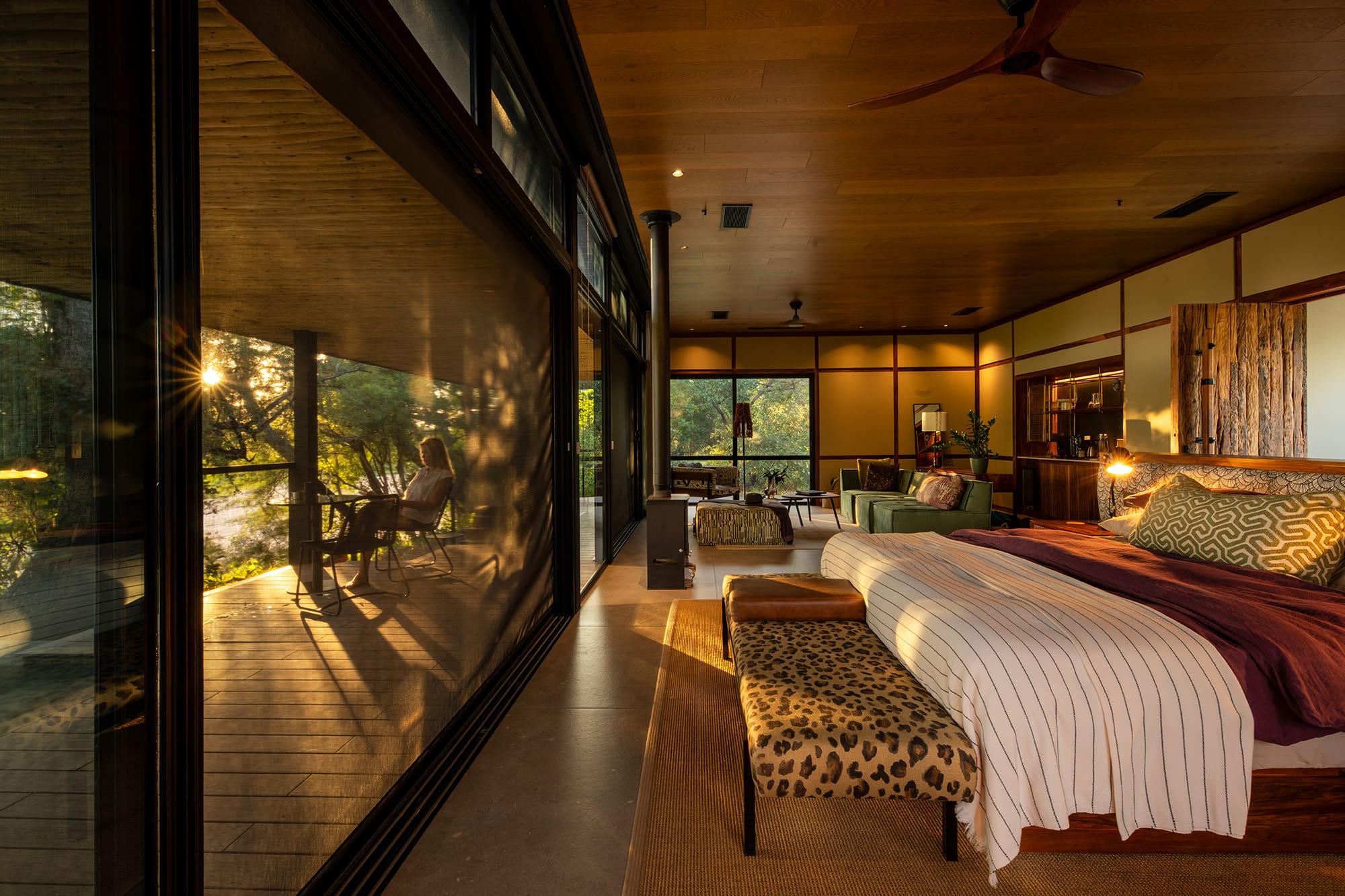
The philosophy in the suites was very simple. Let the bush be the art – there is no need to compete with the view. We kept the interiors calm so that the colours outside could take their rightful place. Soft greens, muted textures, and clean lines serve to soothe.
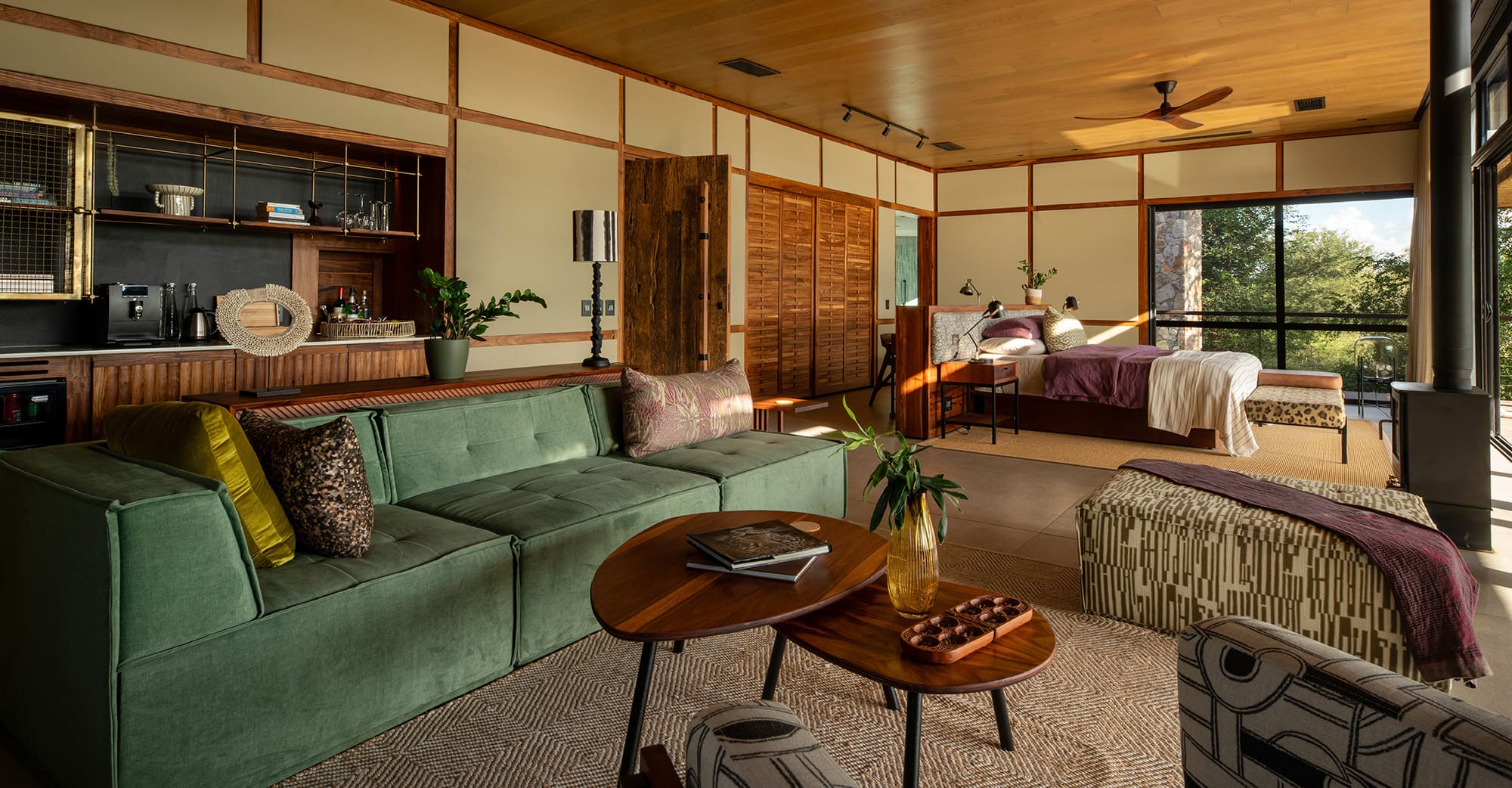
Behind all of this aesthetic simplicity sits Don’s engineering mind. He was deeply involved in every technical detail. Electrical layouts, headboard mechanics, cupboard systems, light placement, and all the bits no one sees but absolutely everything depends on – including a monkey-proof screen that glides shut at the push of a button to facilitate a good afternoon siesta! He has an uncanny ability to foresee what could go wrong and fix it before it ever becomes an issue. Without him, we would have had bathroom lights switching on pool lights, and other such delights. The suites are as comfortable as they are because he cared enough to get every angle right.
The Bar: Where it all starts and comes together
The bar area has always been the heart of the camp. Even long before the rebuild, it was where guides gathered to prepare before sunrise, where stories were shared, where guests drifted in for coffee, a cocktail or a pre-dinner drink, and where the day seemed to naturally begin and end. Nick understood this instinctively and created a space that held that familiar energy beautifully.
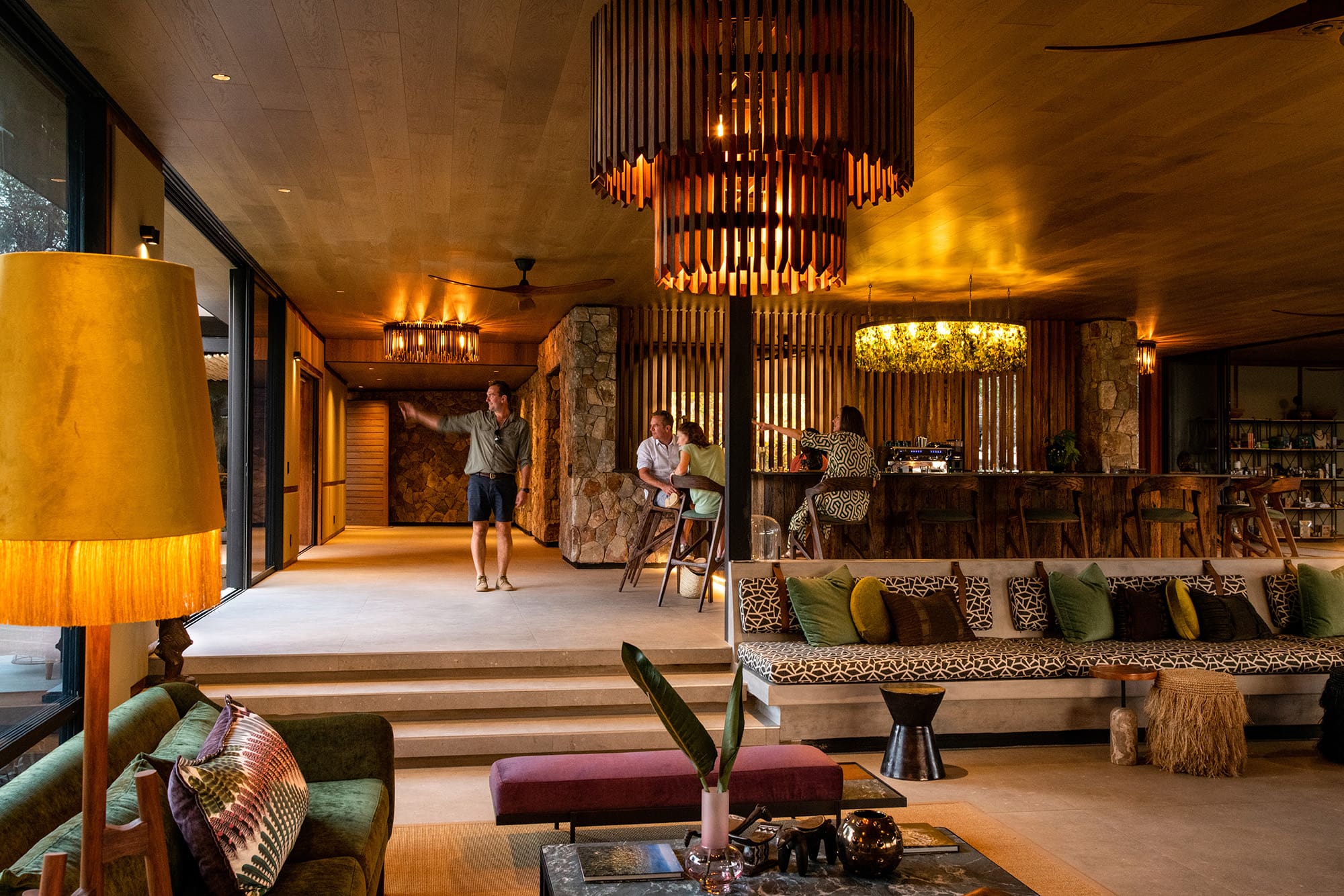
Today, the bar feels like a natural meeting point. It is open, inviting and familiar, a place where guests and our team mingle without formality and where connection happens in the most effortless way.
The Boma and the Nest
The boma became one of the most interesting chapters of the rebuild. The original design, although beautiful on paper, simply did not work when held up against the laws of physics. While we were analysing and discussing possible solutions, the Shangaan builders demonstrated the answer with a few pieces of wood. Their understanding of form and structure is instinctive, shaped through years of working with natural materials. Don took one look and knew immediately they were right.
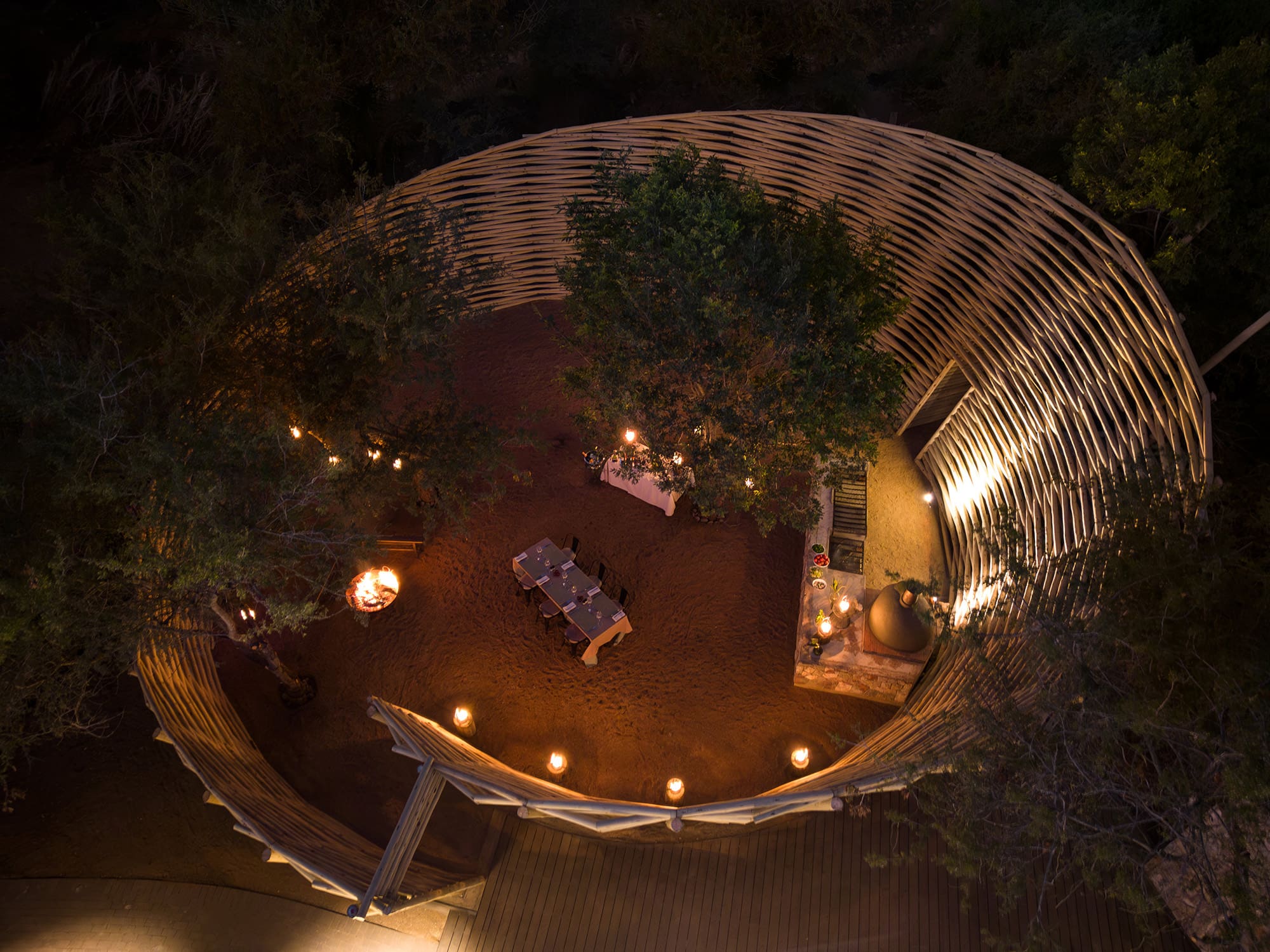
It is moments like these that remind us just how much innate talent lives in the hands of the people around us. What followed was a masterpiece – a boma with curved, sloping edges and organic detail that feels fresh and contemporary, yet still honours a century-old safari tradition of coming together around a fire under the stars.
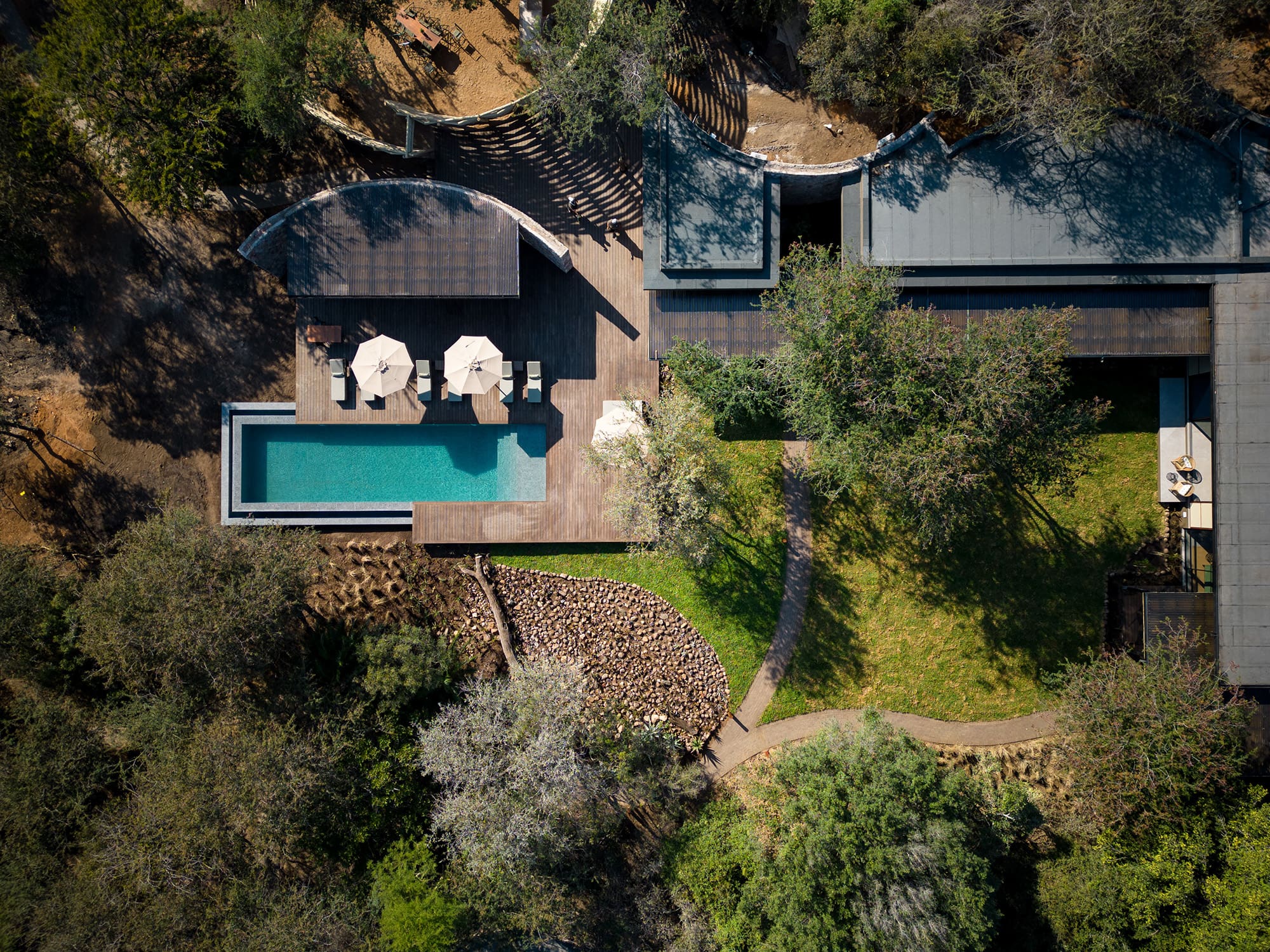
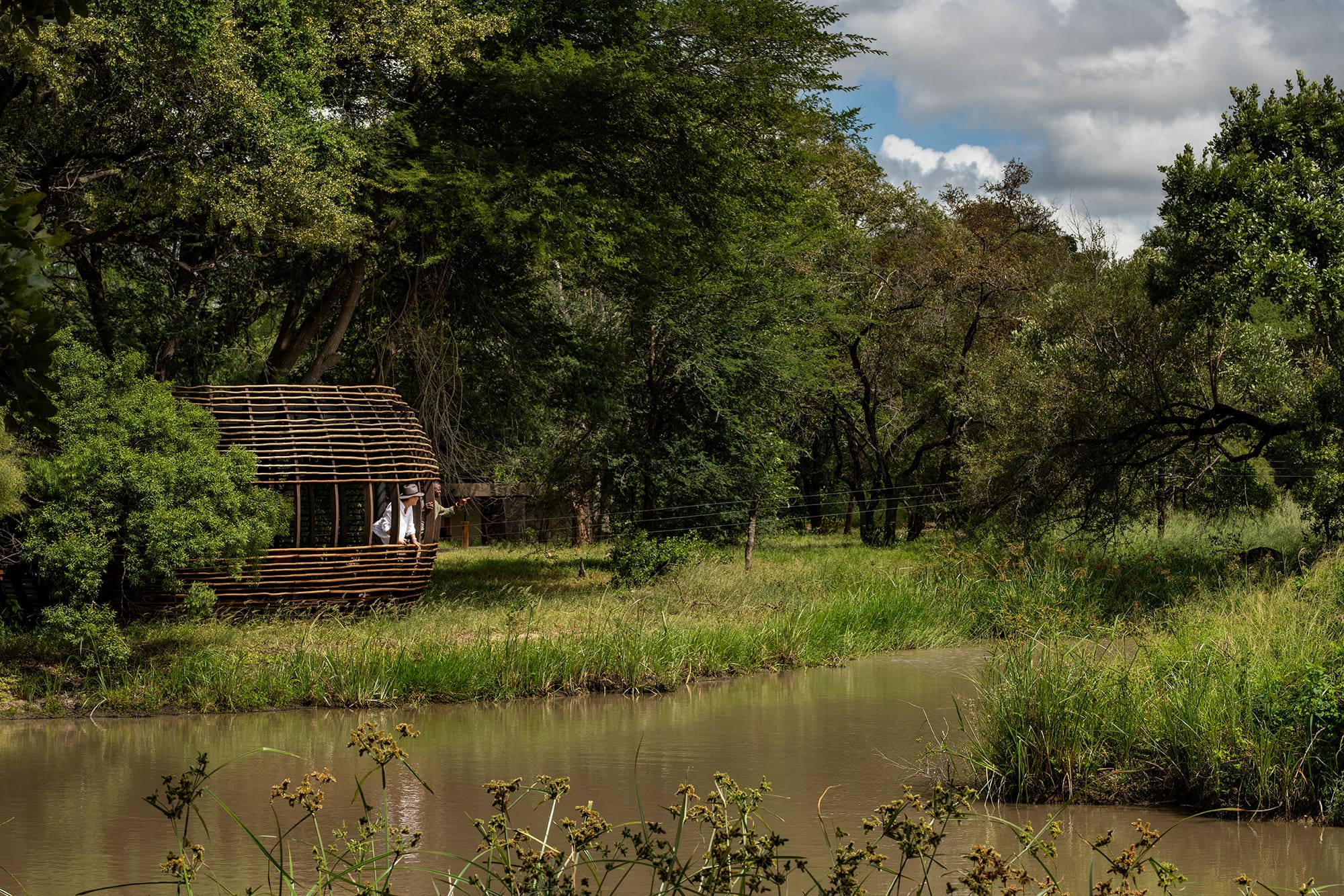
The nest, our hide, was created with a completely different intention. We wanted a quiet place where you could sit safely and watch the bush reveal itself without distraction. Nature rarely works in straight lines, so we followed her lead. The curve of the bridge with subtle underlighting, the round shape of the hide and the gentle sense of enclosure all came from wanting structures that were an extension of the landscape. It was important that the space made people feel held by the environment without ever feeling boxed in.
Together, the boma and the nest represent two essential experiences of camp life. One brings people together, the other offers peaceful solitude. And both reflect the balanced energies that run through the camp.
Bringing Our Team Into the Dream
One of the moments that stays with me most clearly is the day we gathered the entire team in the kitchen to reveal the first renderings of the new camp. We knew from the beginning that this project could only work if everyone in the Tanda Tula family felt included. Guides, trackers, the kitchen team, housekeepers, gardeners, administrators, and leaders all took their seats.
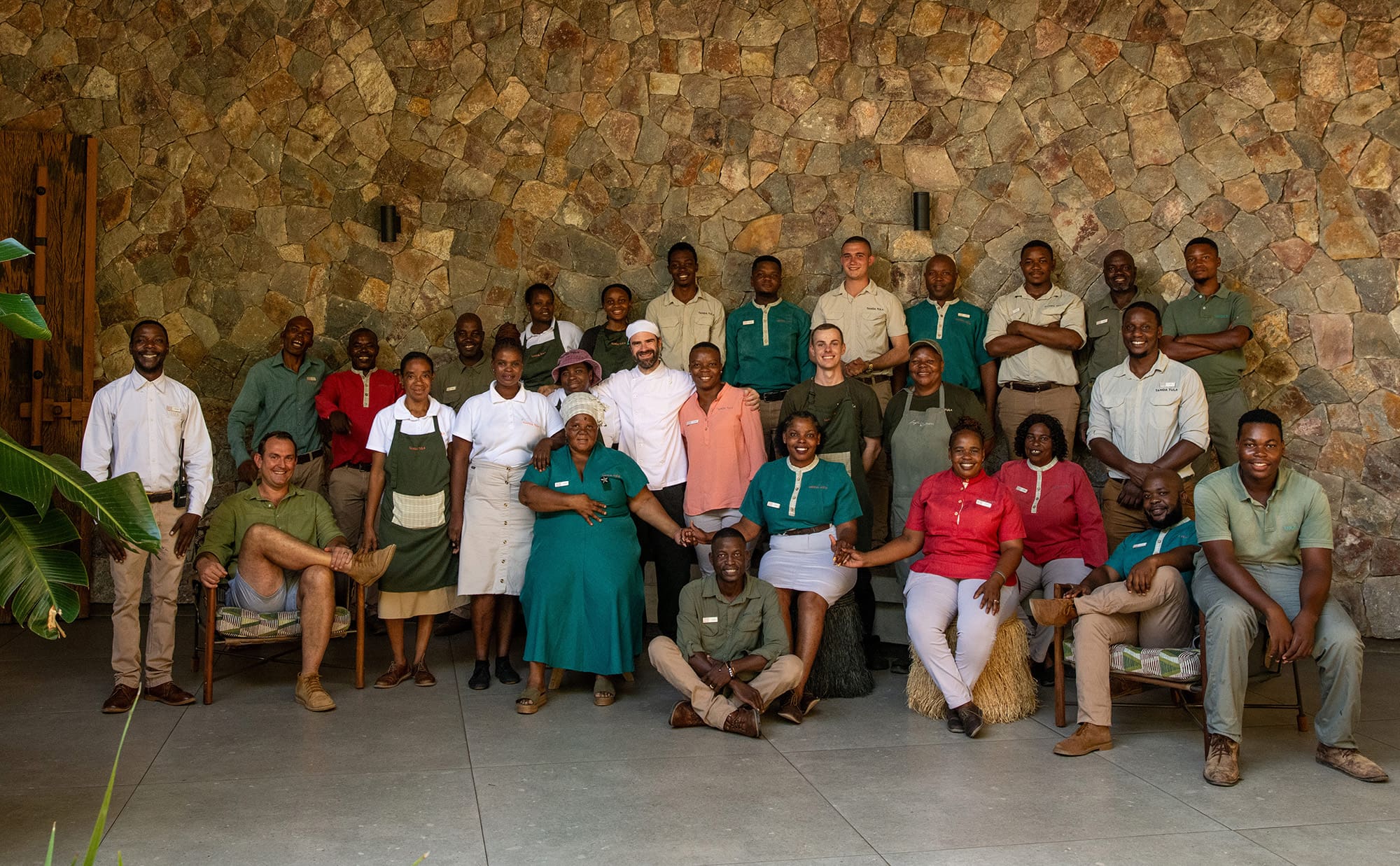
When the images appeared on the screen, the room erupted. Excitement, pride, joy and a collective sense of possibility that none of us had felt in months. In that moment, we were validated that we were on the right path.
I will never forget what one long-standing member of our team, Scotch, said to Don and I, “You make us feel safe.” Those words still move me. They capture everything Tanda Tula stands for – a place where a family of people can create together, where they are seen, valued and held by one another. That moment reminded us that this rebuild was never only about a structure. It was, and always will be, about people.
A Camp Built by Many Hands and One Vision
When I look at Safari Camp now, I see the work of many hands. The creativity, the problem-solving, the long days on site, the practical skill of our makers, and the steady guidance of the people who carried this project from idea to reality.
Rebuilding Tanda Tula Safari Camp can certainly be called a project, yes. But it was so much more than that. It was a story of belonging, partnership and place. It showed what can happen when good people build something with care and intention, and when the land is respected enough to guide the way. This camp carries the balance we hoped it would, and it stands as a reminder that beauty grows out of a sustainable vision, collaboration and trust.