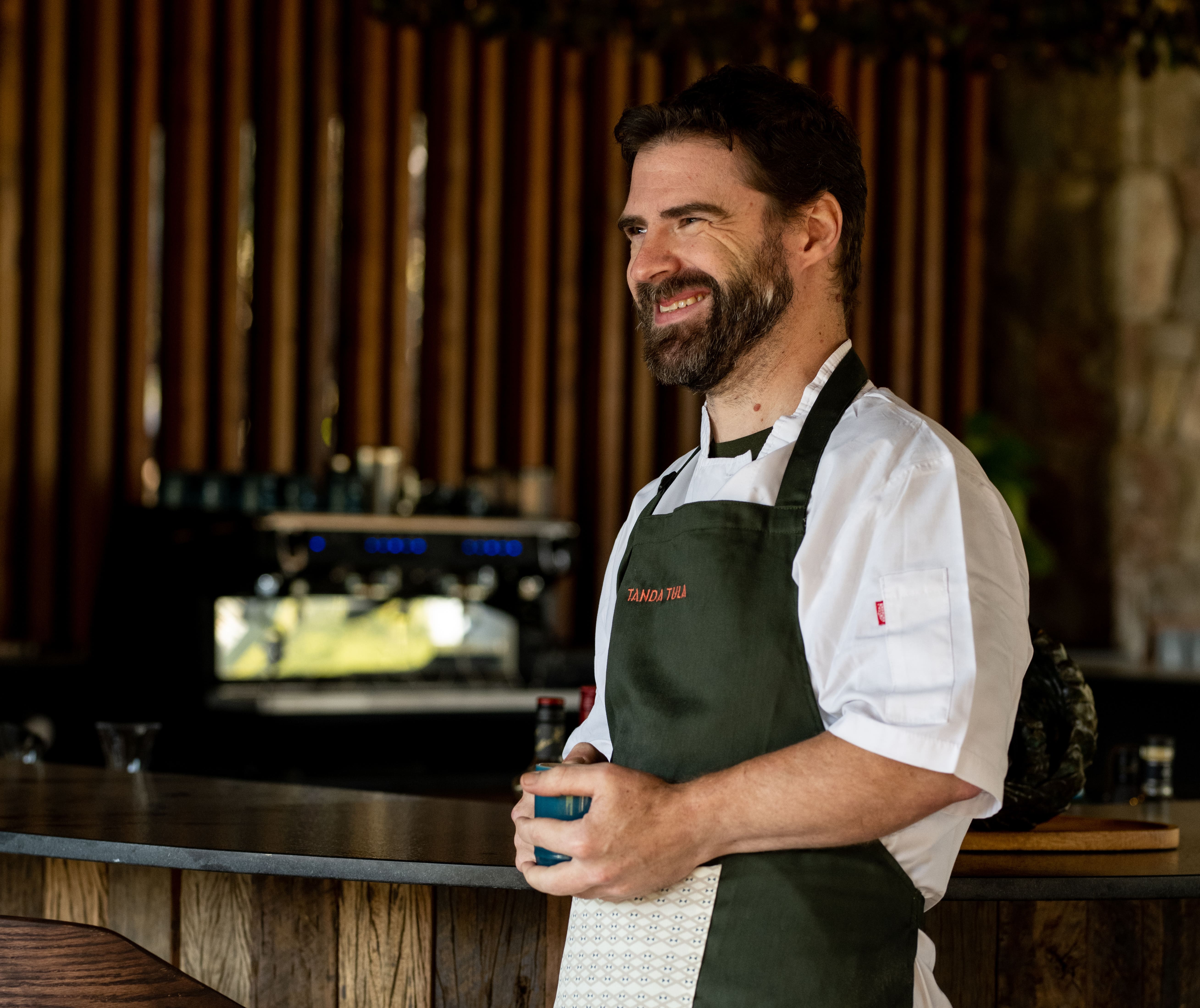
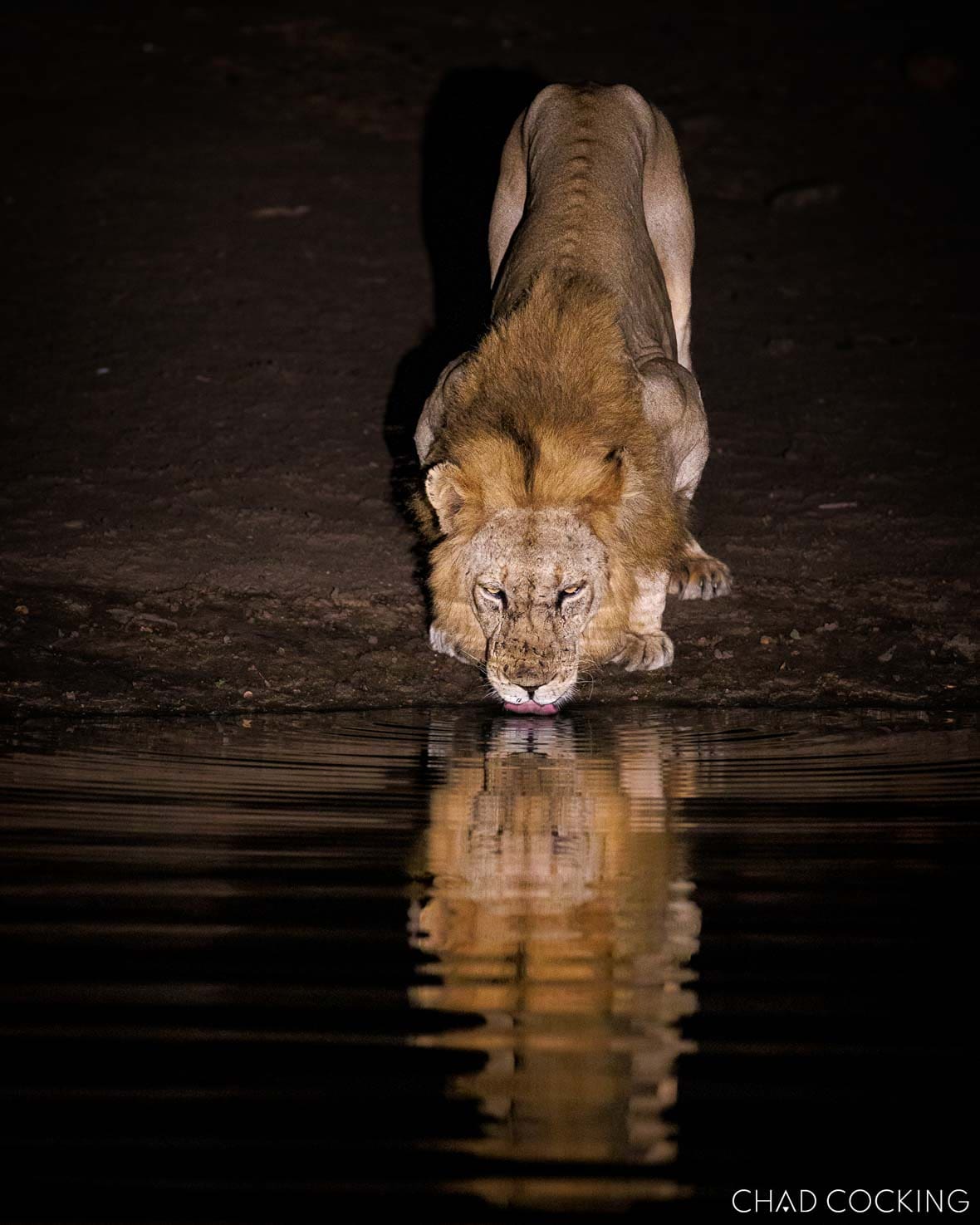
When the Safari Awards named Tanda Tula the Best Safari Cuisine recipient for 2026, my first thought wasn’t about the award itself – it was about the people in my kitchen, and about whether they understood that this moment was entirely theirs.
The Safari Awards are peer-voted, which means this recognition came from the wider safari industry – from people who understand what it takes to feed guests in the bush, night after night, across every season, far from any city and its conveniences.
That kind of acknowledgement carries a particular weight. And yet even knowing that, the instinct was the same: this belongs to the team. We came second last year, and this year we took gold, and if you’re looking for the explanation, it isn’t a recipe or a technique or a trend we caught at the right moment. The award is a cherry on top of something far older and far subtler – something you simply cannot bottle.
The Team That Won This
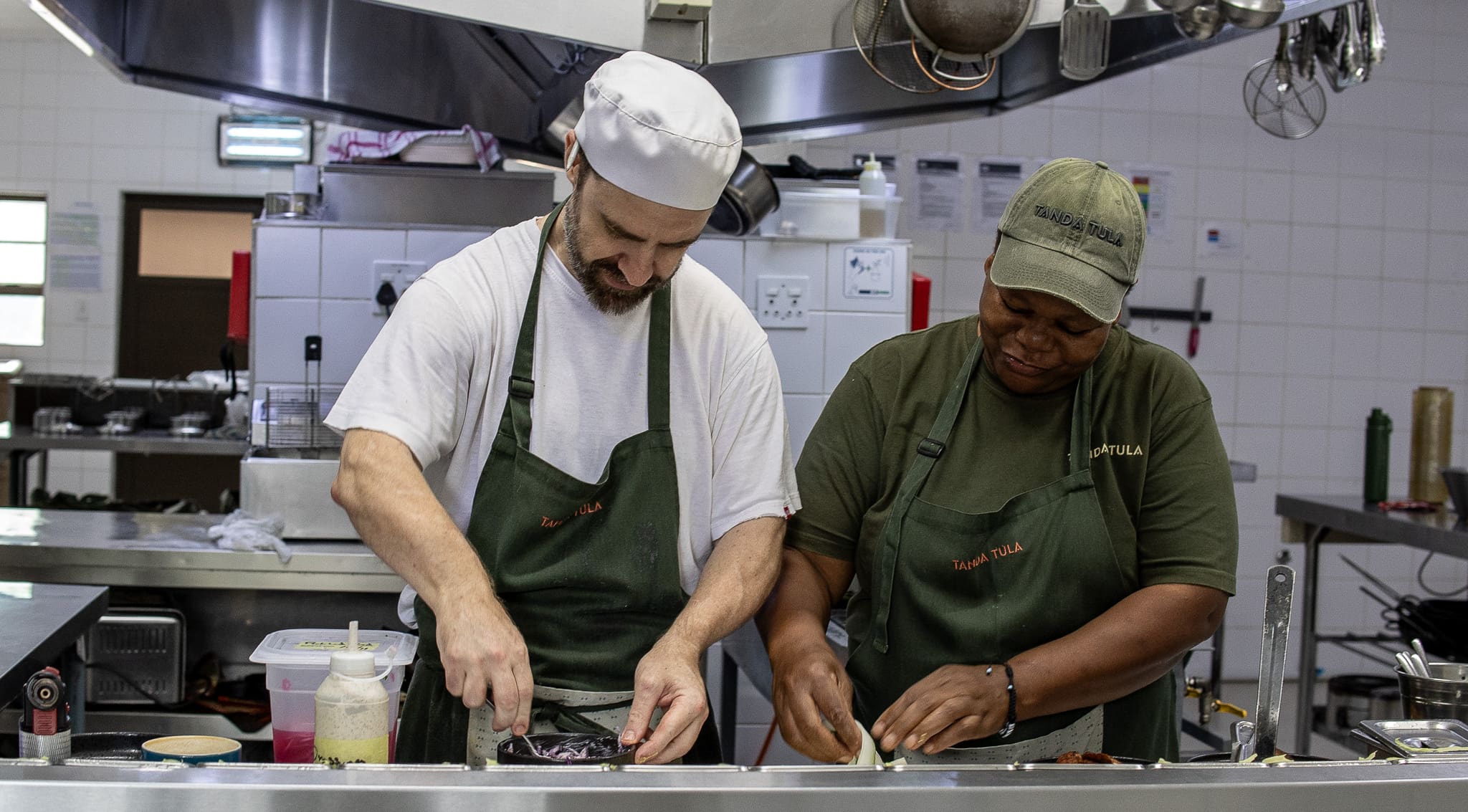
We have been building this kitchen team since 2010, and three of our core chefs have been here from the very beginning. In hospitality, that kind of continuity is almost unheard of. Chefs move. They come in with a vision, they reach a certain point, and they seek the next challenge somewhere new. It is the nature of the industry, and there is nothing wrong with it – except that what gets left behind each time is the accumulated knowledge of a place: its guests, its rhythms, its particular character. What we have at Tanda Tula is sixteen years of that knowledge, held by people who chose to stay and keep growing here.
Over the years, we have been deliberate about bringing younger chefs into the team alongside the experienced ones – and the dynamic that has emerged is one of the things I am most proud of. The senior chefs bring steadiness: they know what holding a standard looks like across hundreds of consecutive nights, they know the difference between a dish that works on a Tuesday and one that endures across a full season. The younger chefs bring an energy and an appetite that keeps everyone sharp. They push each other forward in ways that no chef principal can engineer from the top. The learning runs in both directions, and what comes out of it is a kitchen that is simultaneously consistent and alive.
That is who won this award. The people who show up every day and hold the standard.
The Ingredient You Can’t Bottle
What keeps a kitchen team together for sixteen years in one place is not inertia – it is the opposite. Don and Nina have always moved the yardstick. We reach a standard, we settle into it briefly, and then the bar moves again – not as a criticism of what we have achieved, but as an expression of belief in what we are capable of next. That kind of leadership does something particular to a team: it removes the ceiling. There is no point at which the work feels finished, and so there is no point at which the most curious and committed among us feel the pull to go looking for a new challenge somewhere else.
The management style here is genuinely unlike anything I encountered in the years before Tanda Tula. The kitchens I trained in operated on fear – a thrown pan, a raised voice, the daily reminder that your position was precarious. It was effective in a narrow sense, but what it produced was compliance rather than pride. What Don and Nina have built, and what we try to carry into the kitchen, is a culture where encouragement is the governing principle. When something goes wrong, we sit down and work out why, and we work out how to train toward it differently. The conversation is about growth, always.
A team that feels seen and supported and proud of where they work does not need to be micromanaged. Our guys know what the standard is, they know what we are working toward, and they hold themselves to it with a sense of ownership that no amount of oversight could manufacture. High expectations and genuine encouragement do not contradict each other here – they are what create each other. And the result, the thing that guests feel when they arrive and that other people in the industry have now formally recognised, is happiness. A real, unperformable happiness that comes from a team who are exactly where they want to be.
We cannot put that on a plate. But it ends up there anyway, in every dish we send out.
Honest Food
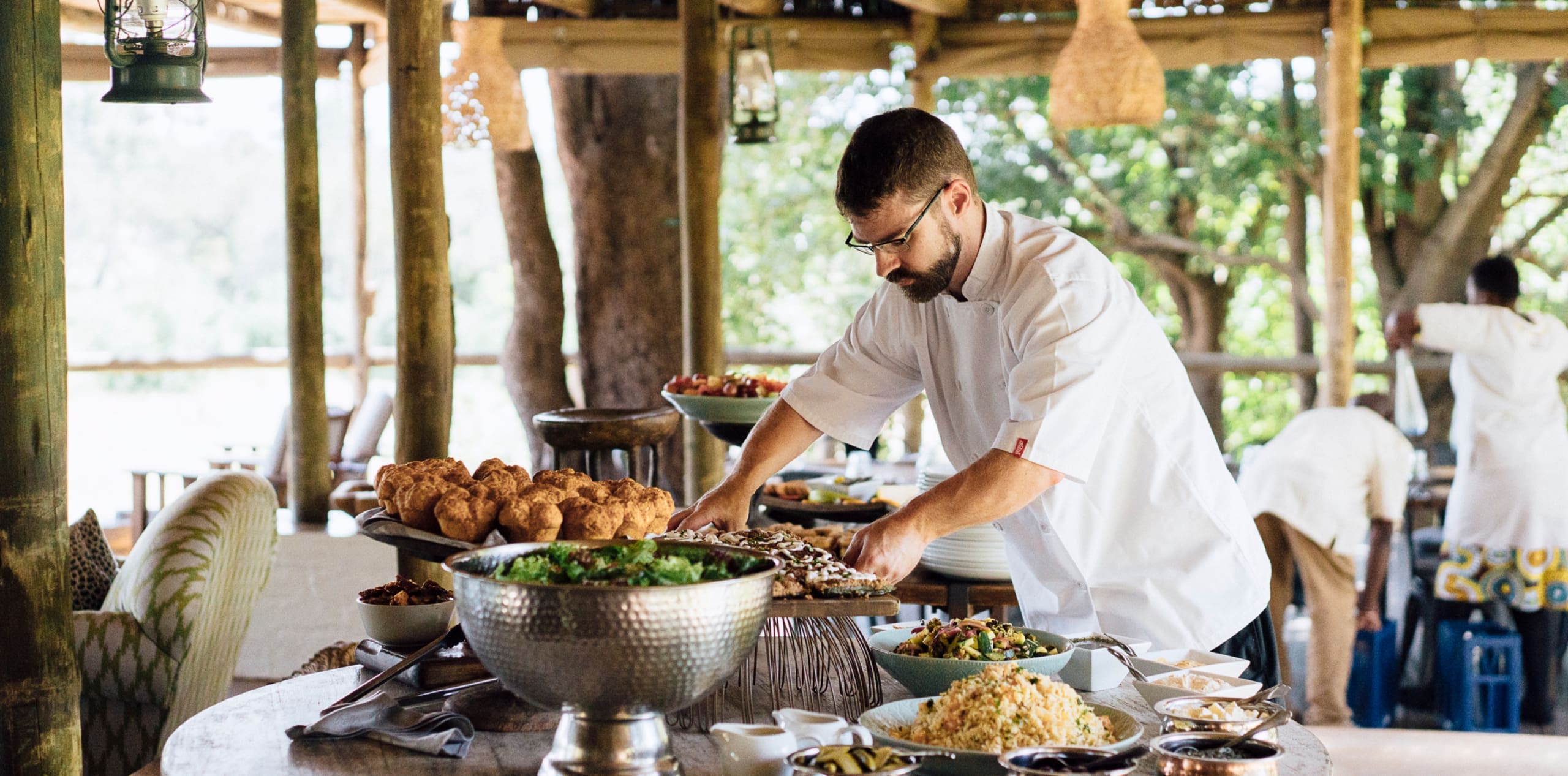
At Tanda Tula, we talk about what it means to operate an ethical safari – to be honest and true to the wild, to the land, to the experience we are actually in. The food we make is an extension of that same philosophy, and the word that keeps coming back to us when we describe it is honest.
Honest to who we are: we are not trend-chasers, and we are unapologetic about that. We do not fly oysters into the bush or import a culinary identity that has nothing to do with this place. We do what we do, and we hold to it with conviction. A guest who wants sushi will be warmly heard and genuinely deterred, and that is the honest answer. You do not come to Tanda Tula for a cuisine that could have come from anywhere. You come here to experience a very specific, very remarkable place – and our responsibility is to give you an honest representation of it on the plate.
Honest to the land: everything we use comes from within roughly 200 kilometres, sourced from local farmers – most of them small, family-run operations whose relationships with Tanda Tula span many years. We grow what we can on-site, and when a guest eats something that came from our garden that morning, we tell them. There is a connection in that moment that no imported ingredient can replicate, and guests feel it. Many tell us they have never tasted food this fresh.
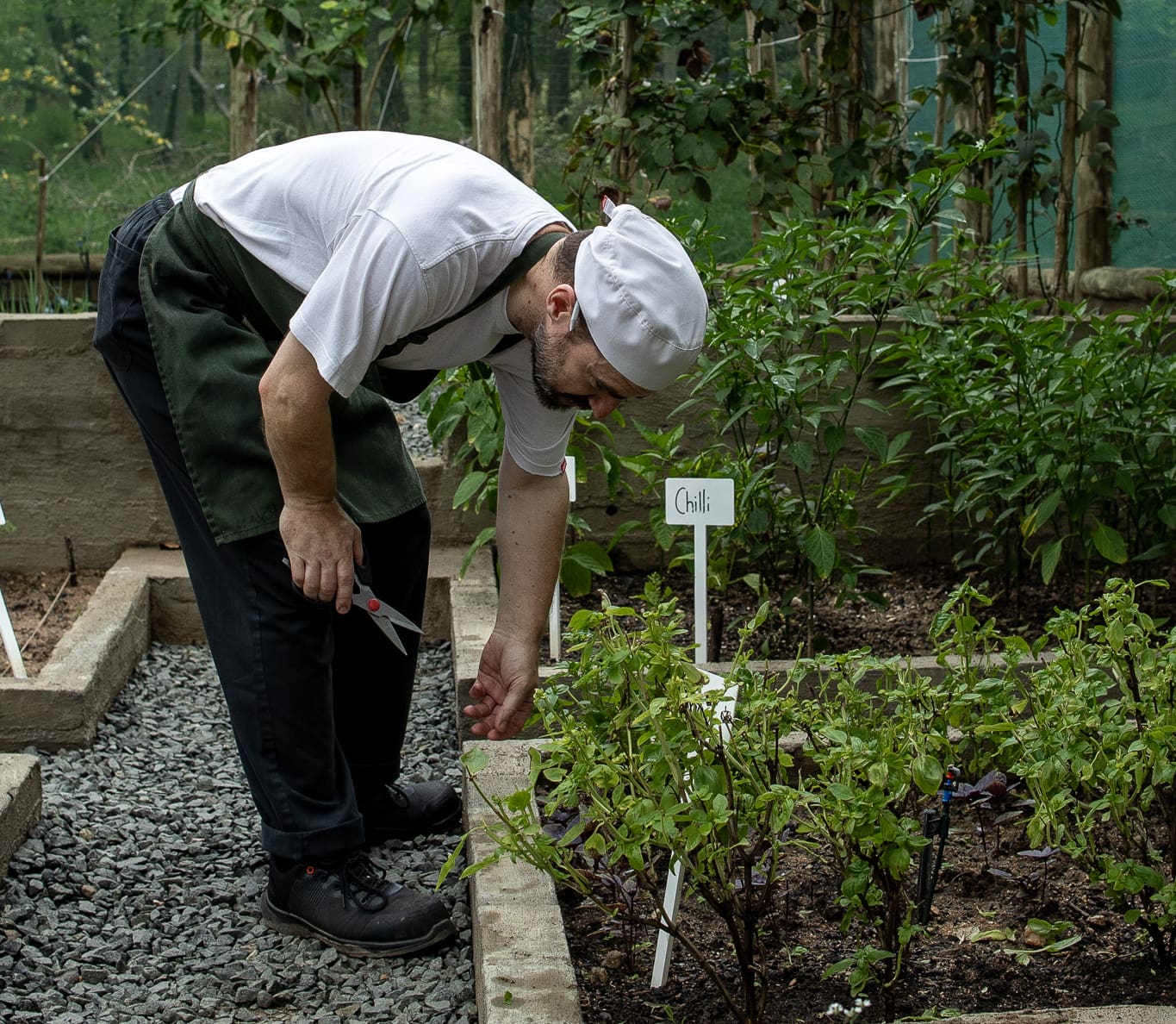
Honest to the guest: we listen carefully and we adapt – portions have become lighter, menus more flexible, dietary needs are taken seriously at every meal without making anyone feel like an exception. And honest to the environment: nothing leaves this kitchen as waste. Food scraps return to the land. The kitchen runs as a closed loop, because that is what genuine respect for this place looks like in practice.
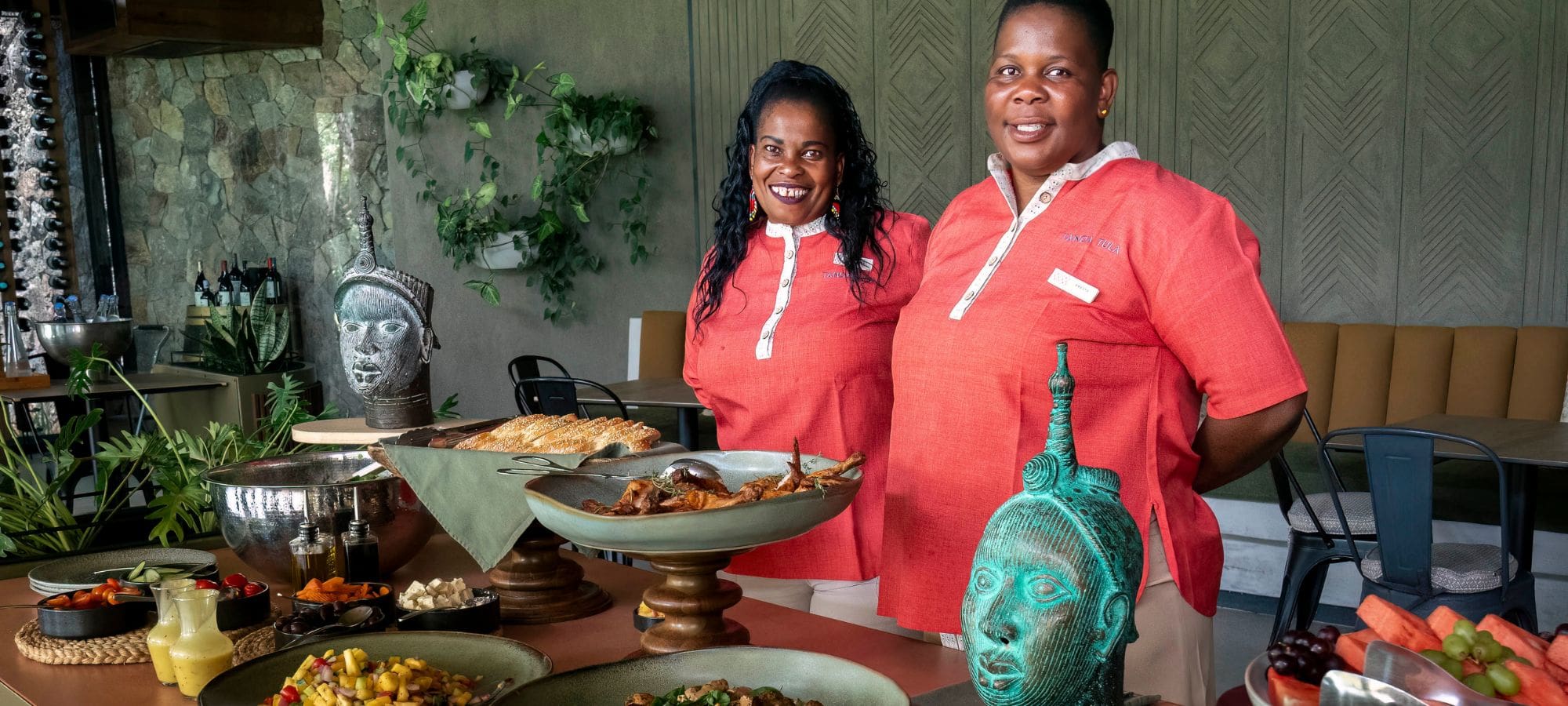
What we will not do is blur those lines. The food here is humble and unpretentious and deeply grounded in place, and we are proud of every plate that leaves this kitchen on exactly those terms.
Ground Roots, Sky Branches
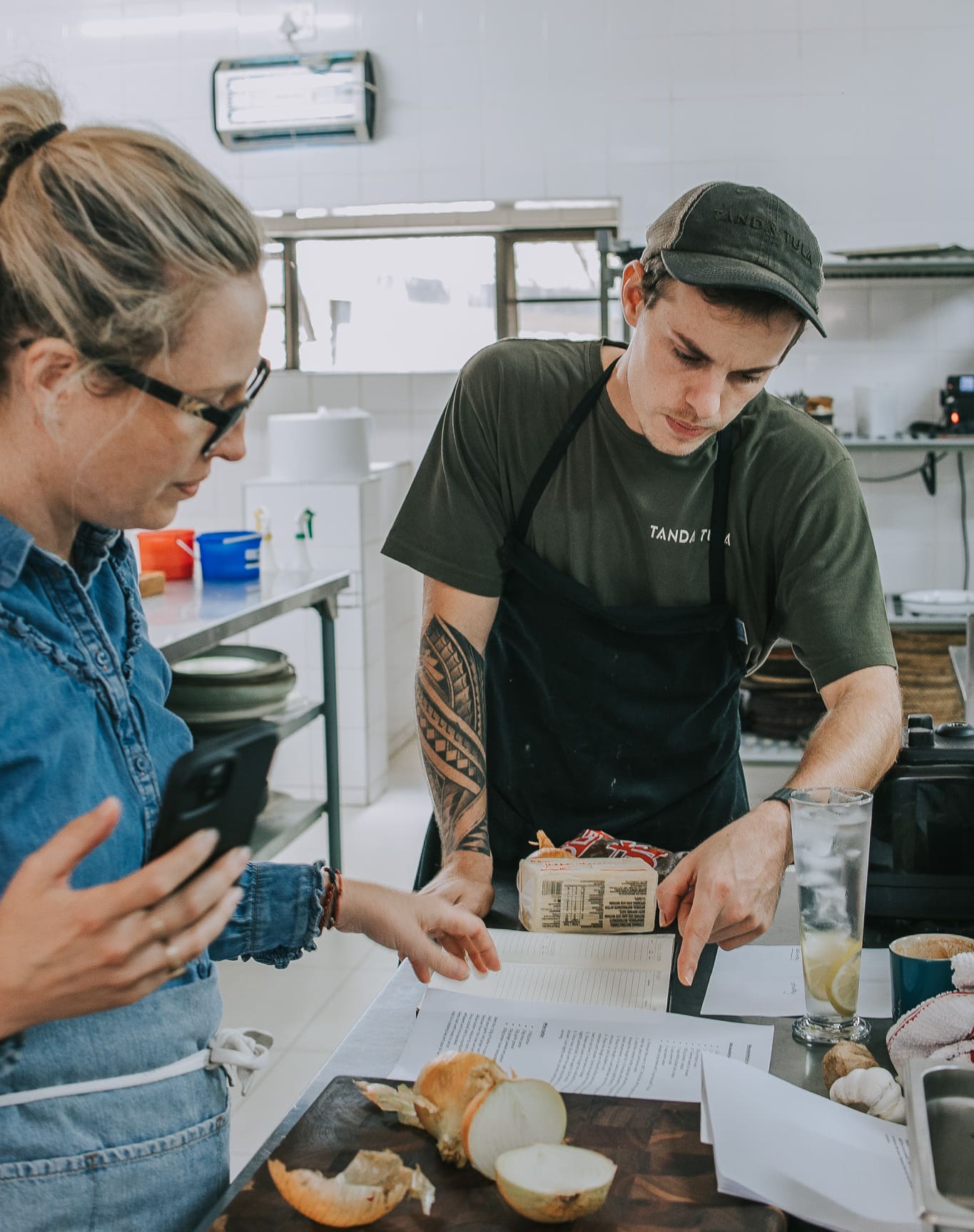
Staying true to your ground roots does not mean standing still – it means that everything you reach for stays connected to where you are planted. We work closely with Hannah, our food consultant, who brings the outside world into the kitchen: global trends, new techniques, shifts in how people are choosing to eat. The collaboration between her wider perspective and the team’s deep knowledge of this place is where the most interesting things happen. Every opinion around that table is genuinely welcome, and ideas are tested with real curiosity.
The filter is always the same question: does this feel like us? Does it feel like the Timbavati Nature Reserve? Does it serve our guests in a way that is true to what this place actually is? When the answer is yes, it earns its place on the menu. When it does not pass through that lens, it does not matter how technically accomplished or globally fashionable it might be – it simply is not ours, and we will not put it forward as though it were.
That discipline is what keeps the food alive and evolving across years without losing its character. The roots hold, and the branches grow as far as they are able.
A Win for the Timbavati
This award belongs to more than our kitchen. It belongs to every person and every piece of land that feeds into what we put on the plate each day.
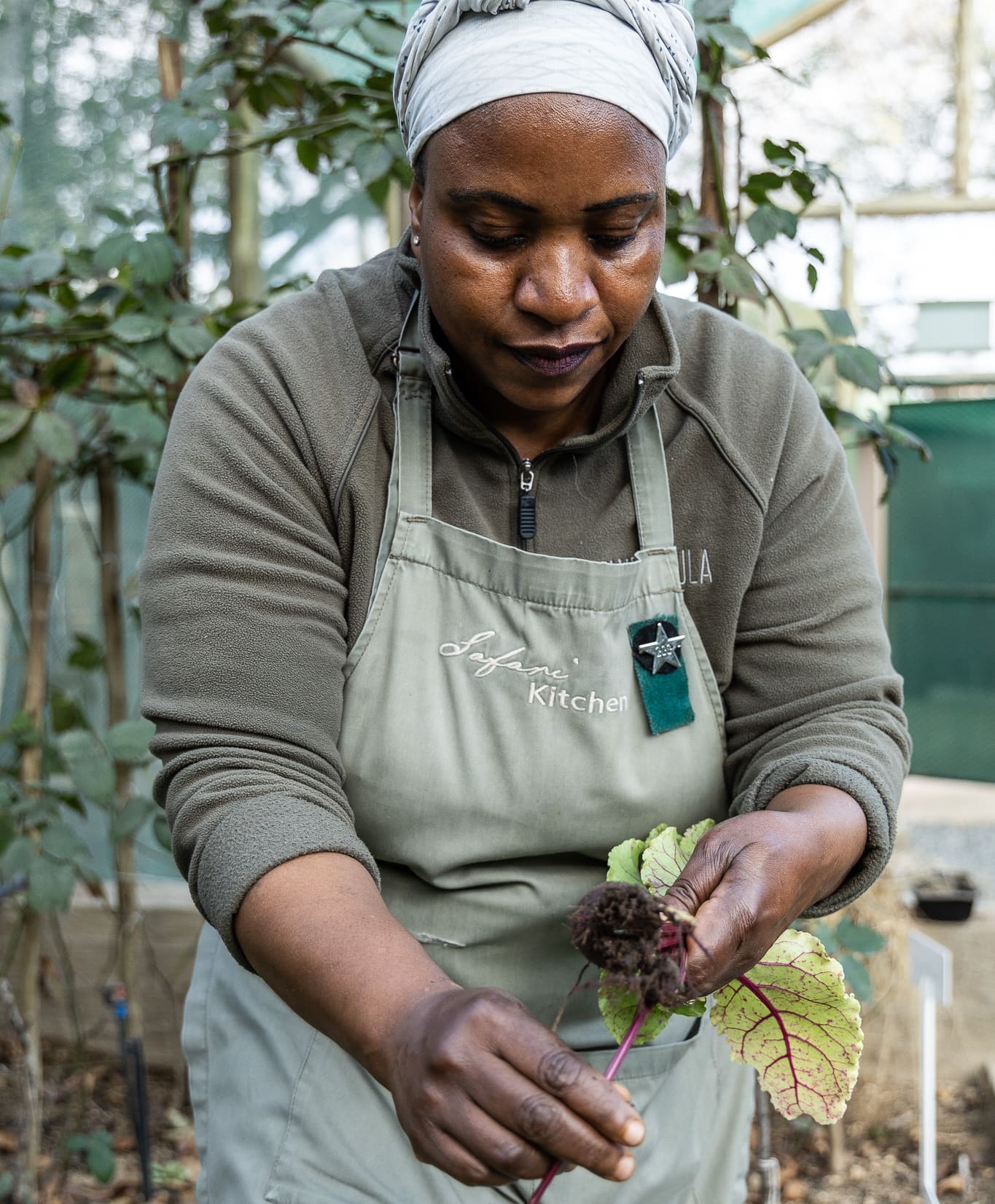
It belongs to the farmers we have worked alongside for fifteen years – small, family-run operations in the Lowveld whose livelihoods are genuinely woven into ours, and whose produce is the foundation of everything we cook. It belongs to the community farming project that has been supplying seasonal vegetables to this kitchen for years, a partnership whose reach extends well beyond the table into clinics and schools and the broader life of the communities around us. It belongs to the garden just outside the kitchen window, and to the people who tend it every morning before the first guests wake.
The Timbavati is one of the most remarkable places on earth – wild, ancient, and particular in ways that resist imitation.
When this reserve appears on the global stage, it matters for every lodge, every conservancy, every family and community that is part of this ecosystem. We carry that name with us, and we are proud of the responsibility that comes with it.
The Guest is Always King
We never set out to win this award. We set out, every single day, to make sure our guests leave feeling better, having eaten better than they expected – and that has been the only brief that has ever mattered in this kitchen. Guest feedback, the kind that comes directly and personally, means more to us than any accolade. It is the guests who carry the name of Tanda Tula out into the world. It is their stories and their memories and the thing they describe to friends when they get home that speaks most truthfully about what we are.
We accept this award with enormous gratitude and enormous pride, and we will celebrate it properly. And then, come Monday morning, the kitchen will do what it always does: show up, cook honestly, and look after the people who have trusted us with their experience. The team keeps us grounded on that. They know why we are here, and they know what we are working toward, and as long as that stays true, the recognition – the awards, the gold – will follow of its own accord.
The ingredient you cannot bottle starts, every morning, with the people who walk into that kitchen.
– Chef Ryan Mullett
Executive Chef, Tanda Tula Safari Camp, Timbavati Private Nature Reserve