Introducing the Tanda Tula Foundation through its first pillar; Education
This piece introduces a broader exploration of the Tanda Tula Foundation’s work. Over the coming months, we will share the many layers of its impact – from conservation and leadership development to practical support systems that shape futures in profound ways.
It feels right to begin with education – something that sits very close to both Nina and Don Scott’s hearts, embodied in the sage words of Nelson Mandela: “Education is the most powerful weapon which you can use to change the world.”
Today, this story forms the foundation of the broader Tanda Tula Foundation education programme.
People First. Foundation Later.
The story of the Tanda Tula Foundation did not begin with a strategic vision, a committee meeting, or a formal intention to build a non-profit organisation. It unfolded gradually, through a series of human moments that Nina and Don noticed simply because they were close enough to see them.
As Nina explains, “We didn’t wake up one morning and decide to start a Foundation. It grew out of the needs of the people right in front of us.”
Its earliest spark came one afternoon when Nina noticed Smiling – a long-standing team member – paging through a National Geographic at the bar. He admired the photographs but admitted he struggled to understand the articles. That simple exchange planted a seed, and Nina asked whether he might be interested in joining a small reading group. The next morning, twenty-eight staff members stood outside her office.
“We want to join the school,” they said.
Understanding the Landscape
Many of the older women and men who had been part of the Tanda Tula team for decades had grown up with limited or no access to schooling. Entire generations had been shaped by the legacy of apartheid: women who had never attended school; adults who could not read or write; and staff who relied on interpreters out of necessity, not choice.
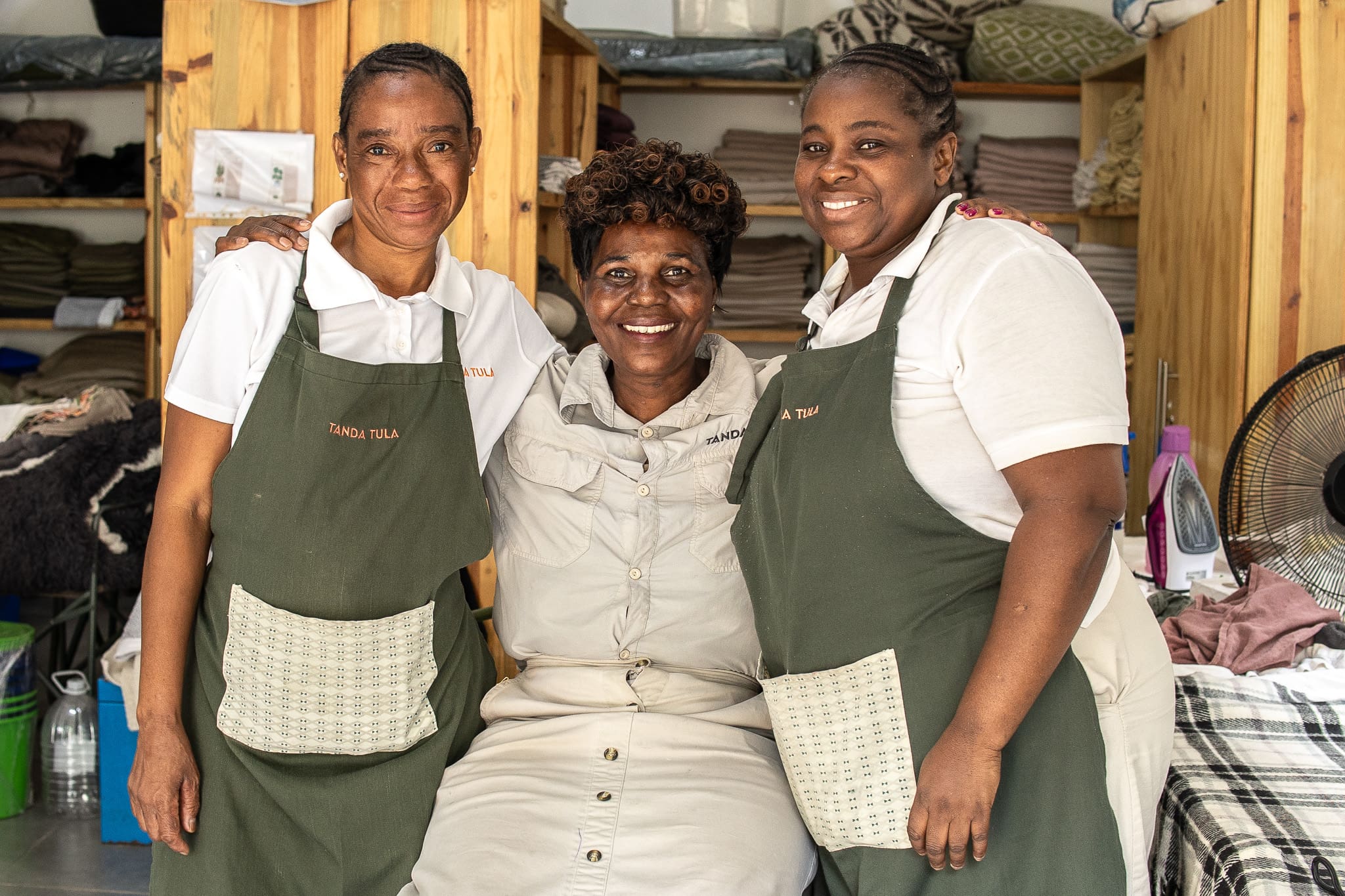
Lindiwe, Loyce and Cecilia, dedicated members of the housekeeping team, photographed in the linen room at Tanda Tula.
This lack of shared language created a subtle undercurrent of mistrust in our workplace. People communicated cautiously, unsure of how to bridge the gaps in understanding.
A Reading Group That Became a School
What began as an informal reading circle soon developed into a structured adult literacy programme. Nina taught the early classes herself, weaving lessons into her responsibilities as a lodge manager and a mother to three young boys. With guidance from adult education specialists, she introduced three literacy levels, used African stories rather than Western fables, and ensured that learning was co-created rather than dictated.
- Beginners were encountering letters, sounds, and basic comprehension for the first time – many of them older women who had never been to school.
- Intermediate learners had some early schooling, often interrupted, and needed support with vocabulary, pronunciation, comprehension, and confidence.
- The advanced group read at roughly a Grade 5–7 level and were ready to work on fluency, more complex texts, and applying literacy skills in everyday life.
Moving between these groups gave Nina a deep understanding not only of each person’s progress, but of their life stories – how they grew up, why schooling was interrupted, and what learning meant to them as adults.
Learning Materials That Reflected Their Lives
One of the earliest realisations was that the content mattered as much as the lessons. Traditional literacy materials often relied on ‘Bob & Jane’ Western narratives that felt distant and irrelevant. So Nina sourced African folktales, local legends, familiar cultural stories, magazines, and sometimes even sport-related material – anything that resonated and felt relatable. Classes chose books together. They discussed what they wanted to learn, and why.
In Nina’s words: “They’ve been dehumanised enough as it is. You cannot come in and disempower them further by choosing their stories for them. It has to be something we create together.”
This co-creation became a cornerstone of the programme. Choice created ownership. Ownership created confidence. Confidence created belonging.
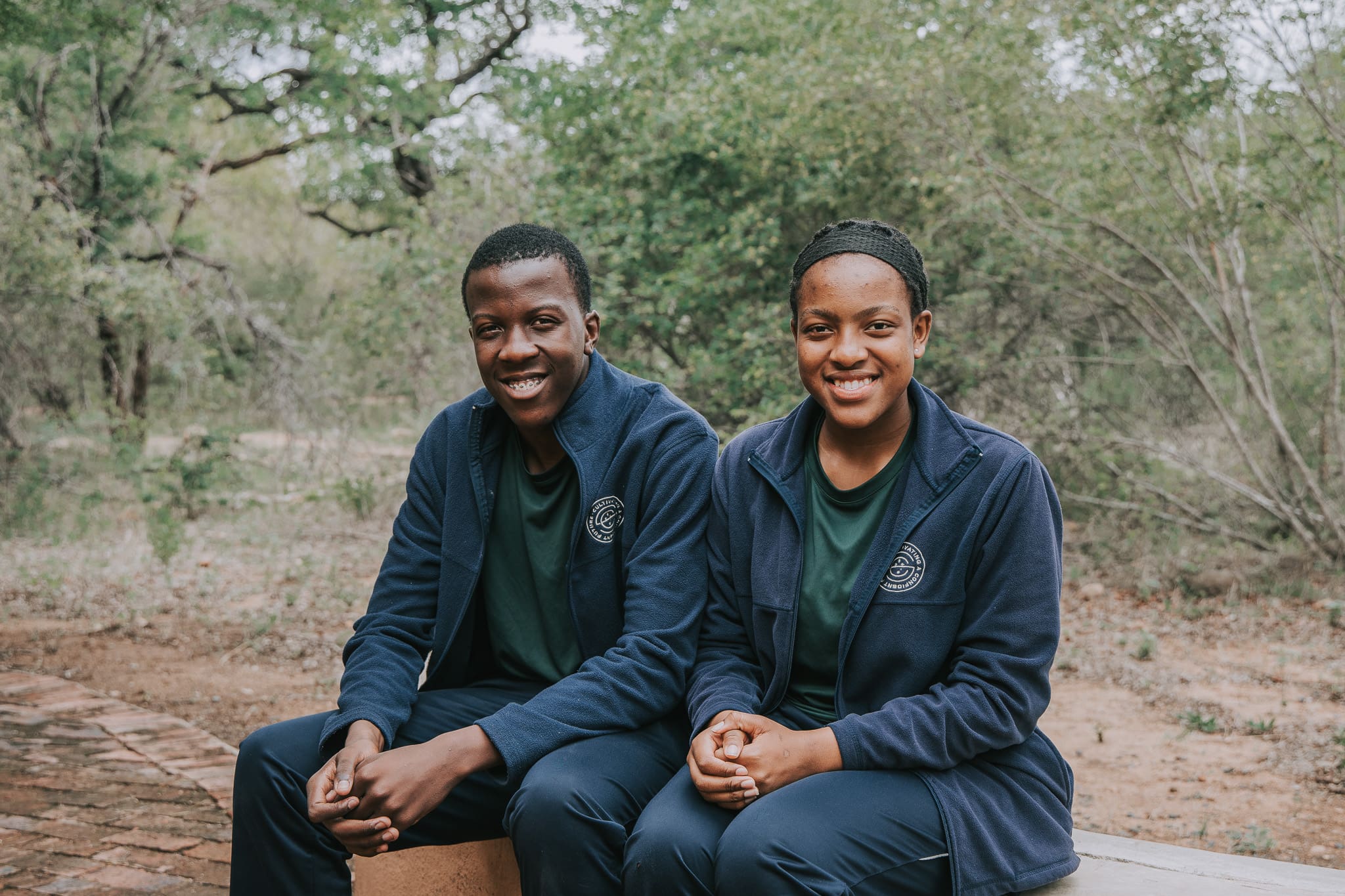
Vutomi and Lesego, part of the younger generation whose futures are supported through the TT Foundation’s educational initiatives.
A Programme That Deepened and Flourished
As the programme grew, specialist teachers like Anne Watts and Natalie McFarlane joined, enriching the curriculum with art, storytelling, and practical life skills. Lessons became a space for learning, yes, but also for laughter, shared courage, and newly-discovered ability.
A guest, so moved by what he witnessed, later funded a fully equipped classroom in the staff village – complete with desks, shelves, teaching materials, and a small but cherished library. Over time, the library became a source of great pride: books were borrowed, exchanged, recommended, and taken home to children and grandchildren.
Nina reflects: “Hearing how these adults read to their children for the first time… it still gives me goosebumps. The pride they feel is just incredible. When someone’s self-perception shifts like that, anything becomes possible.”
A Transformation Felt Across the Camp
In time, the change became visible everywhere: women reading aloud in the laundry, staff practising new English phrases with guests, and colleagues helping one another with homework from their classes.
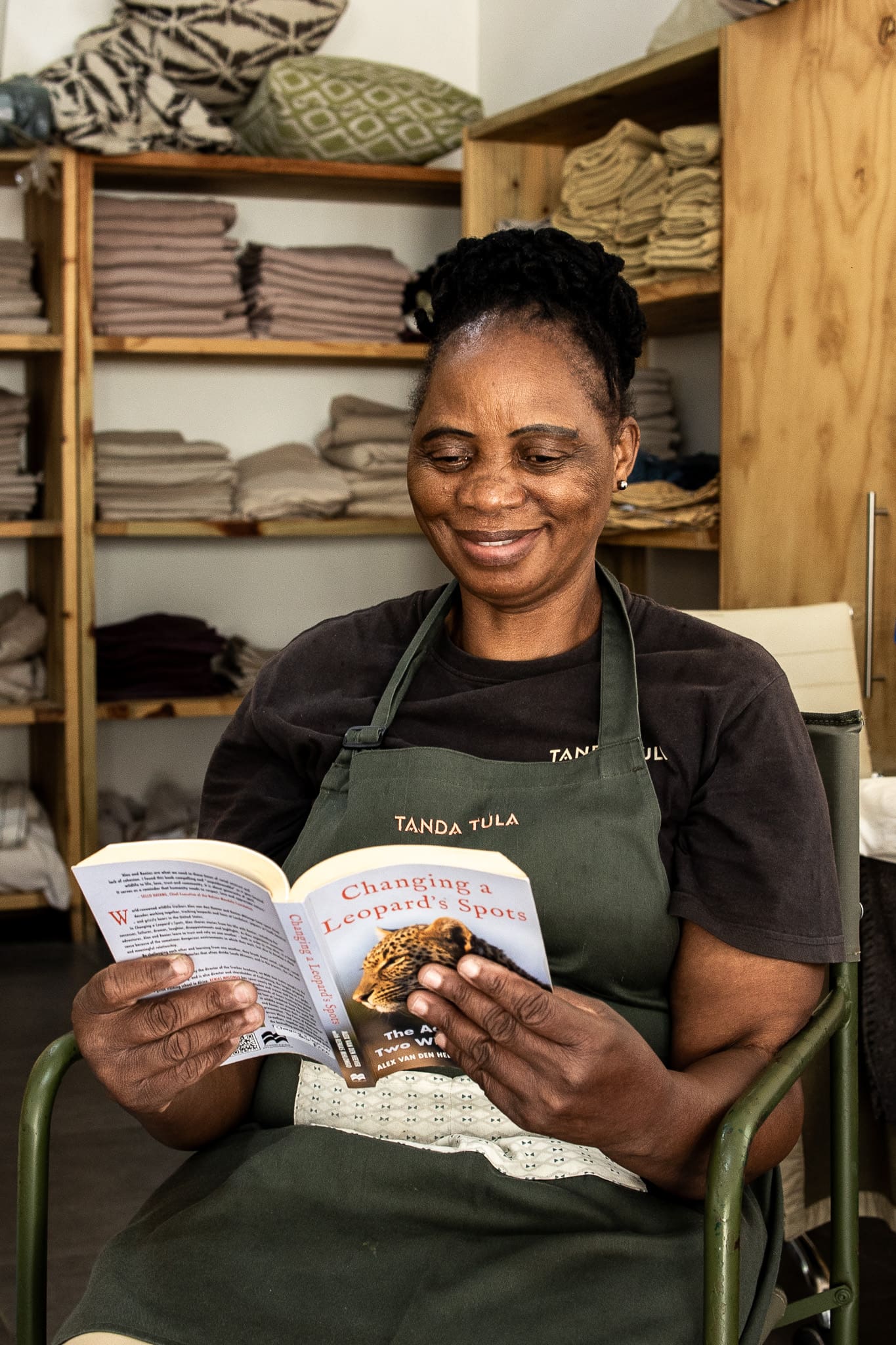
Lineth, a long-standing member of the Tanda Tula housekeeping team, deep in reading as part of the lodge’s literacy initiative.
It also softened relationships. Warm calls of “Mama Nina!” and “Mr Don!” drifted from kitchens, pathways, and laundry rooms – invitations to watch someone reading, and a clear sign that trust and connection were taking root. “It brought us closer together,” Nina says. “The mistrust disappeared. At the risk of sounding poetic, what was left was just love.”
The Birth of the Tanda Tula Foundation
In the early days, the idea of forming a formal foundation felt premature. Don’s practical philosophy has always been: “Before you can to do good, you first need to do well. You need to make money before you can put it to good use.”
But as Tanda Tula became more financially secure, and as the literacy programme expanded in depth and responsibility, the need for a formal structure became clear. The Scotts therefore formalised the Tanda Tula Foundation as a registered entity – providing the transparency and structure needed for sustainable growth.
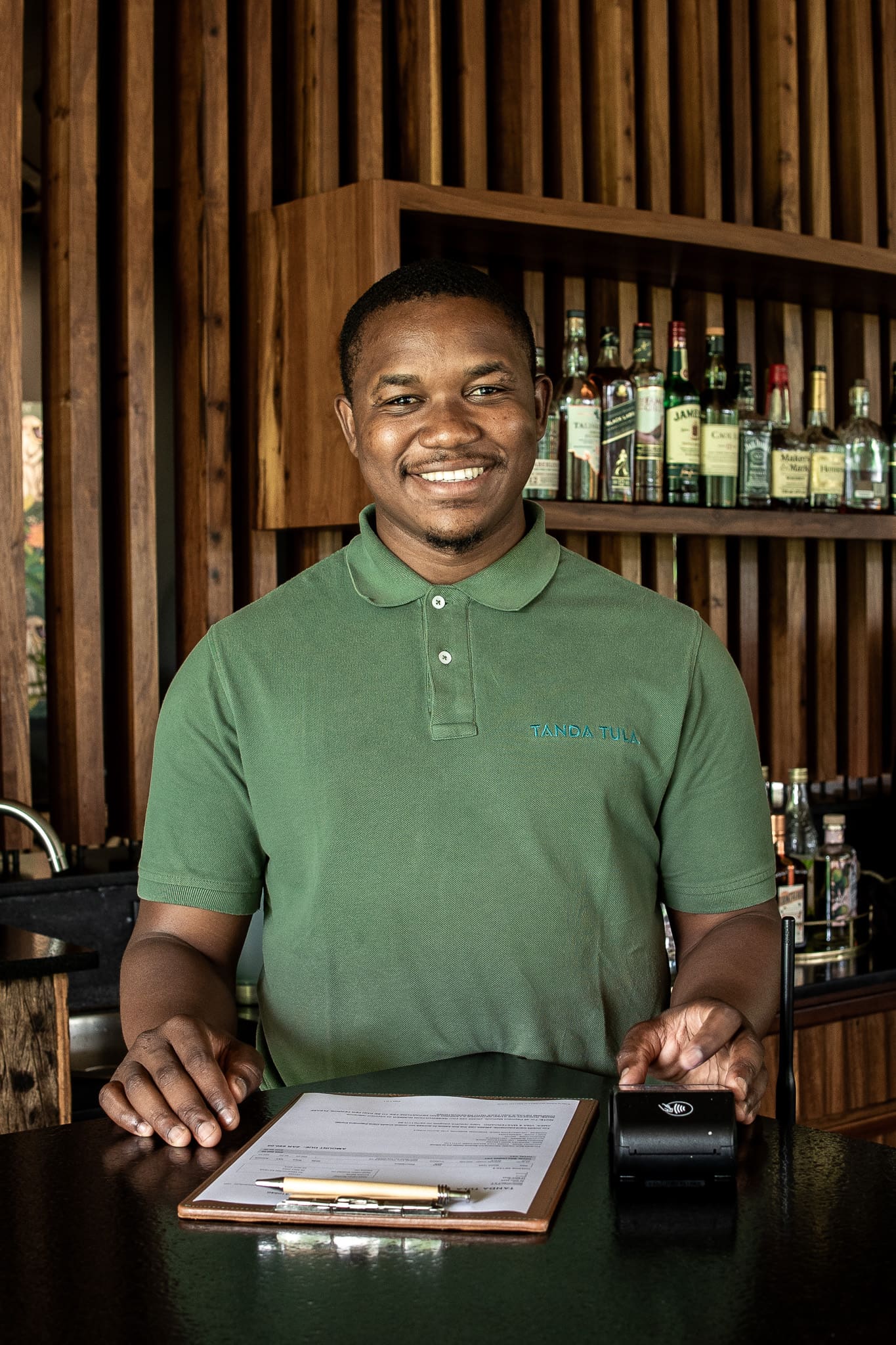
Kgaphy at work in the bar, one of the many team members whose growth has been supported through ongoing training and development at Tanda Tula.
With the Foundation in place, the leadership team explored how best to reinvest Tanda Tula’s profits into the lives of their staff. They offered them two choices: profit sharing, or investing in their children’s education at Southern Cross (a private school in Hoedspruit).
Nina recalls: “Hands down – they all chose education. Every single one of them.”
It Takes a Family to Educate a Child
This offer became a long-term partnership. It was never just about school fees. Tanda Tula supported uniforms, transport, school camps, sports kits, and extra lessons – and, importantly, gave parents the time they needed to show up for their children.
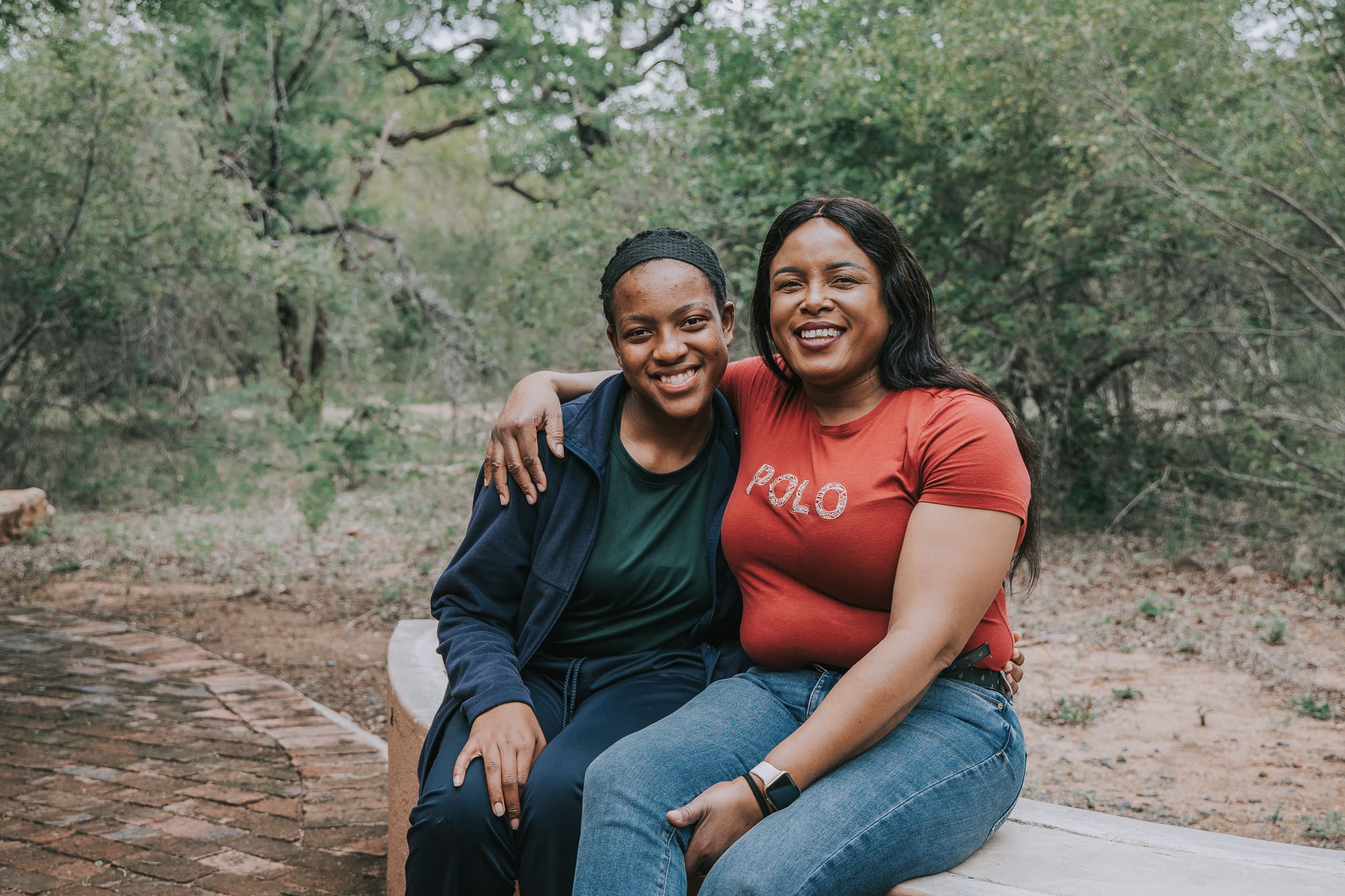
Lorraine and Lesego sharing a moment together, reflecting the support and connection that shape life at Tanda Tula.
A fundamental part of the programme was one contractual condition: parents had to be actively involved in their child’s school journey. They were expected to attend meetings, support homework, show up for sports events, and be present when their children needed them. For many, this level of parental involvement was a significant cultural shift. And yet, they rose to it – consistently, and with immense pride. That commitment, as much as the financial support, is what carried these children forward and strengthened family bonds.
Today, five children remain in school, two have completed high school, and three are pursuing university degrees in fields including engineering and accounting. Several adults within Tanda Tula continue their own literacy and vocational training, ensuring that the cycle of learning stays alive.
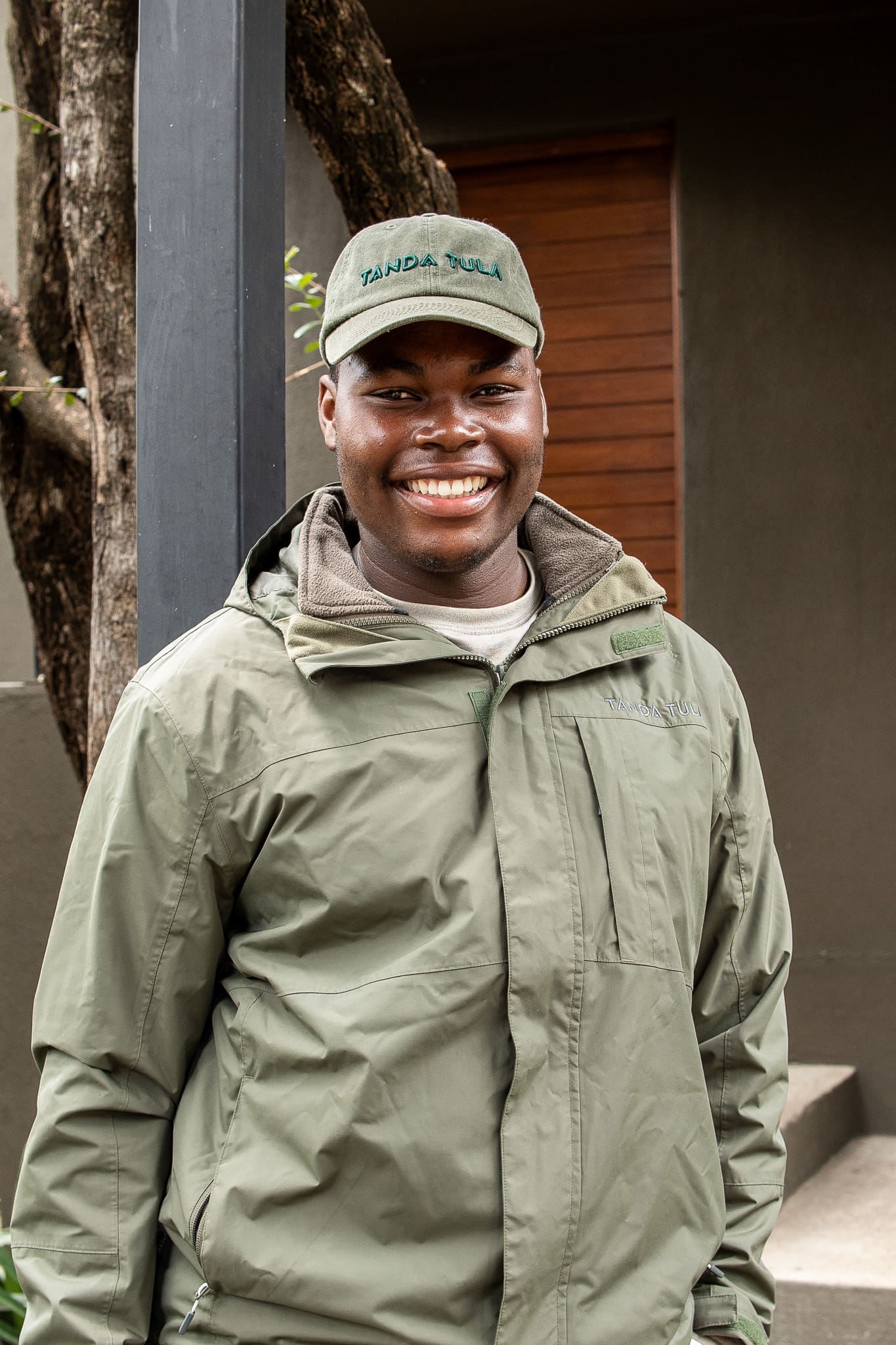
Expect, part of the next generation growing within the Tanda Tula family through mentorship and ongoing training.
Tertiary Education Calls for a Holistic View
Most tertiary bursary programmes cover tuition and books, but not the full spectrum of what a young person needs to succeed. For graduates from rural communities, the real challenges often appear once they arrive on campus: reliable Wi-Fi, transport to/ from and accommodation at exam venues, and navigating an unfamiliar academic environment. This is where the Tanda Tula Foundation steps in. When one of their community’s graduates earns a bursary, the Foundation bridges the gaps – ensuring they have the resources, support, and stability needed to flourish. The Foundation has never been about ticking boxes. Its focus is on removing the practical, financial, and emotional barriers that stand between a young adult and their future.
Where to next?
The next chapter of the Foundation’s work begins once again at home, with numeracy. Many adults who missed early schooling carry anxiety around numbers that affects everyday life, from budgeting and banking to saving, borrowing, and navigating modern financial systems. To address this, Nina is introducing a digital numeracy app designed specifically for adult learners, making it easy for staff to build confidence with numbers at their own pace. It is a practical tool that restores agency.
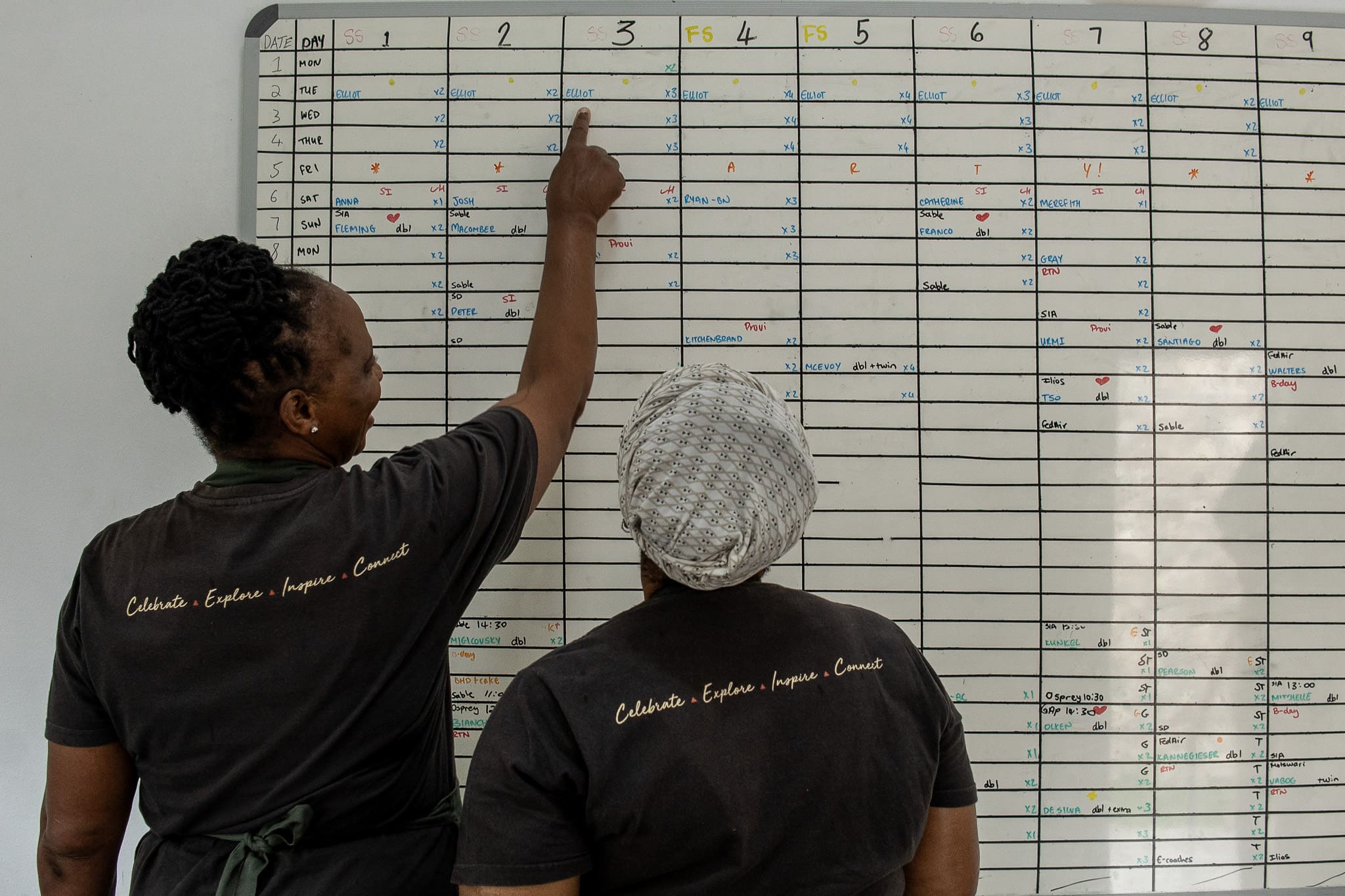
Team members reading and interpreting the daily operations board, a task many now approach with confidence thanks to the TT Foundation’s numeracy work.
With her inner circle now stabilised, Nina has also begun looking outward to the broader Acornhoek community, where so many of the Tanda Tula team live. Her intention is not to create new structures, but to support and reinforce what is already there. Early conversations with local schools, educators, and community leaders will focus on where the Foundation can offer respectful, meaningful support that complements existing efforts.
The next chapter is about extending dignity and opportunity beyond the camp, into the community that shaped the people who shape Tanda Tula.
It Starts at Home: Why Tanda Tula’s Approach Works
Many organisations begin their upliftment work by looking outward. Tanda Tula’s approach is different: it begins at home, with the people who are part of the camp’s daily life.
“It’s futile trying to change an entire community tomorrow,” Nina says. “You start in-house. Get to know your staff. Understand their lives, their responsibilities, their challenges. That’s where change begins.”
Don puts it simply: “Talent is evenly distributed in a population. Opportunity is not.”
This philosophy continues to guide the Foundation’s work.

Dolly and her son Vutomi, sharing a warm moment that reflects the family connections at the heart of the Tanda Tula community.
An Unconditional Invitation to the Industry
Nina believes deeply that supporting even one adult or child can change the trajectory of an entire family. And when one family shifts, it influences the community around them. Multiply that across an industry, and the impact becomes extraordinary.
Her invitation is open and without condition.
“If any other hospitality business owners want to do something like this – even for one adult or one child – I’m happy to share our model and everything we’ve learned over almost twenty years,” she says. “The more of us who do this, the more impact we can create.”
It Starts At Home will become the umbrella for this invitation – a movement encouraging conscious hospitality leaders to begin where their impact is most immediate and most lasting: within their own teams.
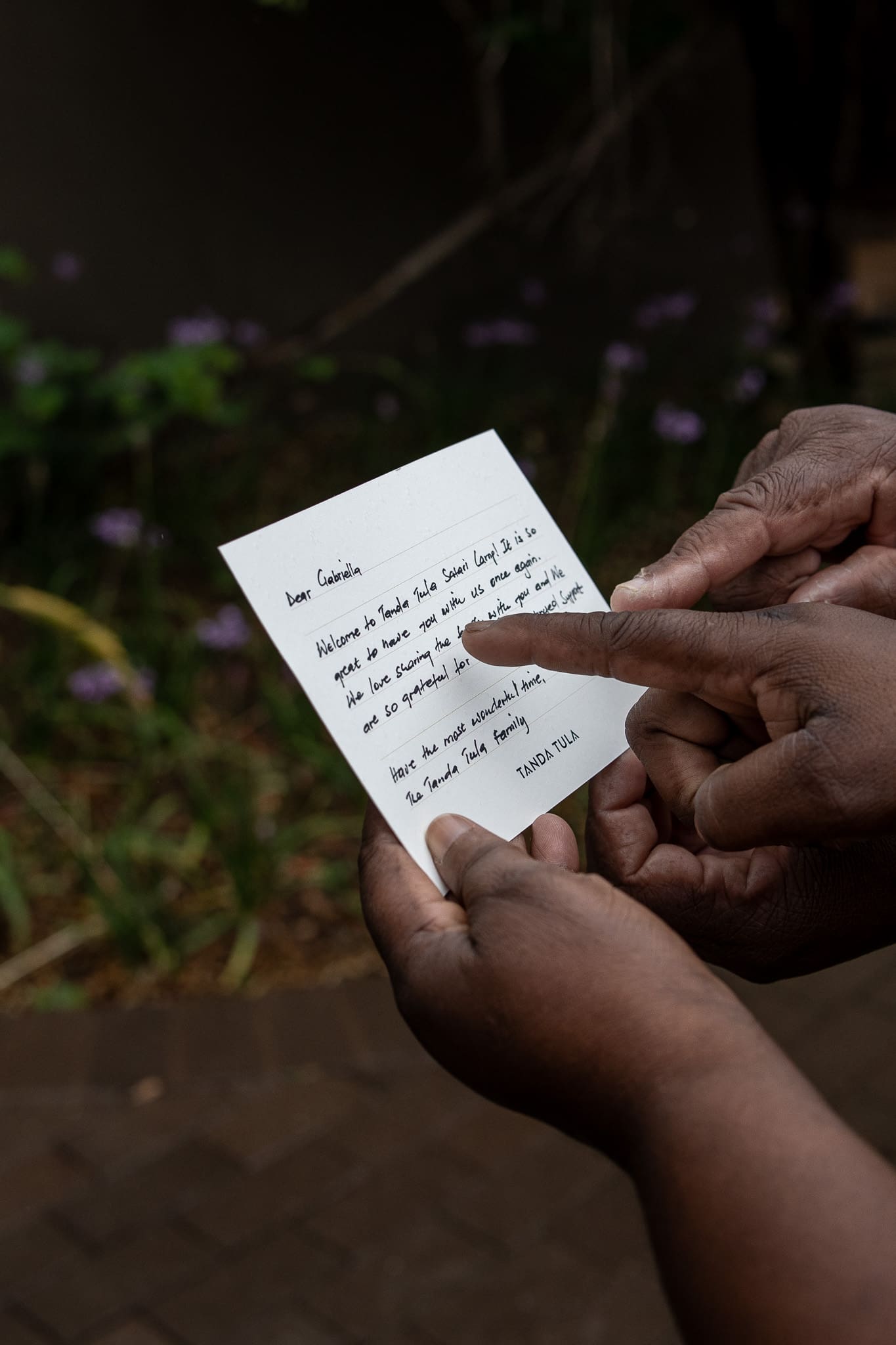
A quiet moment of two team members reading a handwritten welcome card, reflecting the confidence and pride nurtured through the TT Foundation’s literacy efforts.
Closing Reflection
This is where the story began: a conversation at the bar, a magazine, and a moment of curiosity.
And it continues today because one truth remains unchanged:
Education is at the root of sustainable transformation – and meaningful change begins at home.